Contents ⌄
- Why an old house in Lefkada is so appealing
- What to check before buying an old house
- Which permits are required for renovation
- How much it costs to renovate a house in Greece in 2026
- Engineer, contractor and timelines
- Energy upgrades and subsidy programmes
- Taxes, VAT and purchase
- Golden Visa at €250,000 through renovation
- How to get started
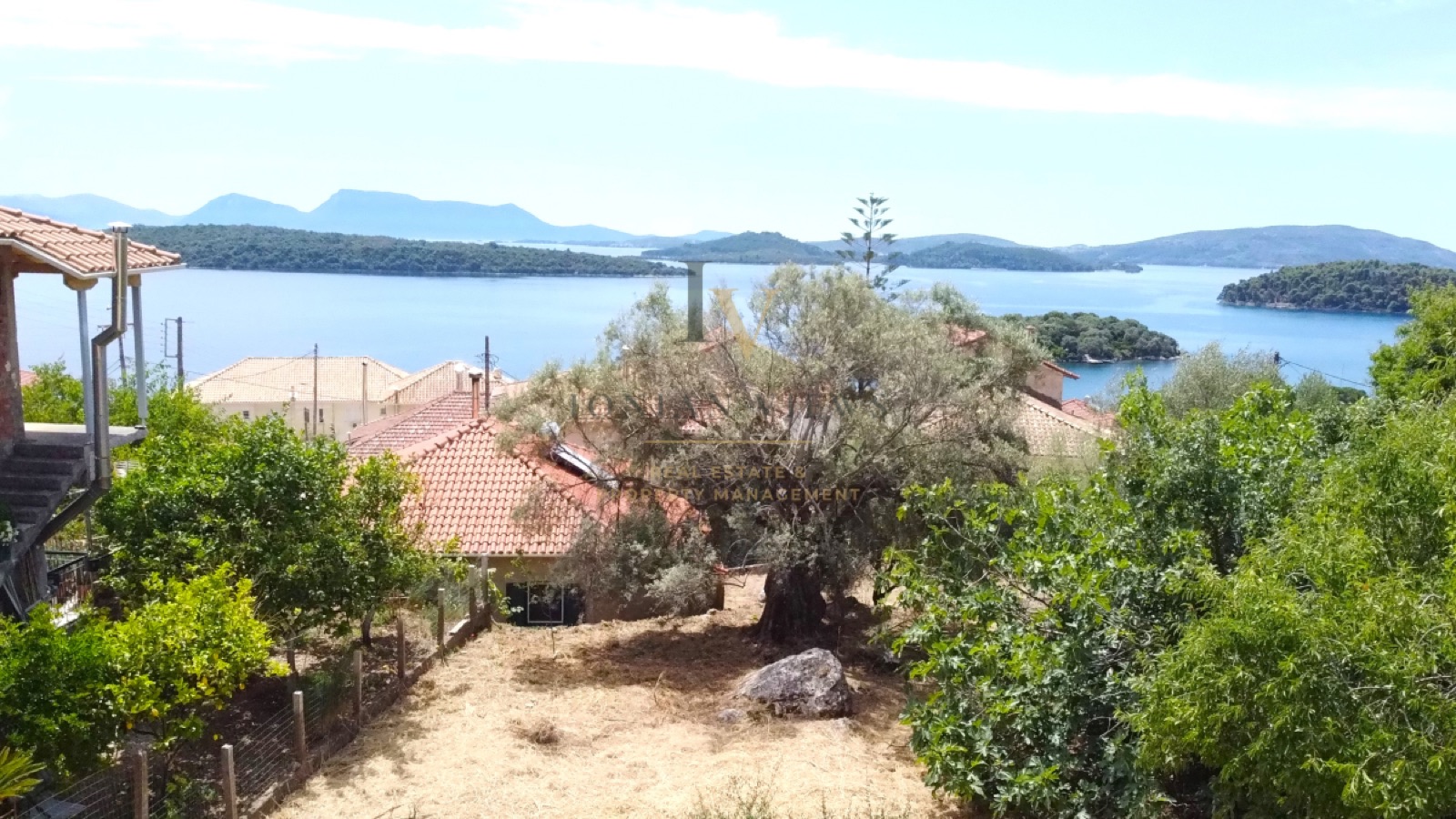
On every property tour in Lefkada, this moment arrives: an old stone house in a mountain village, with thick walls, faded wooden shutters and a balcony overlooking the sea. The price looks low compared with a new villa, and your imagination is already racing ahead. Renovating a house in Greece can be an excellent way to get a home with character at a reasonable price, but it can also turn into a project that drags on and becomes more expensive without end. The difference is almost always decided before you sign.
In this guide we have brought together what to check before buying an old house, which permits are required for renovation, how much it costs in 2026, how long it takes and which tax aspects and routes such as the Golden Visa are worth knowing about. If you are considering buying a plot and building from scratch instead, we have a separate guide on buying land and building in Greece. Here we focus on a house that already stands, for better or worse. This is also the material we at Lefkada Properties go through with every client interested in an old house.
Why an old house in Lefkada is so appealing
In the villages of Lefkada, such as those inland and on the mountain slopes, there are quite a few old stone houses and village homes that have stood empty for years. Some have been inherited by several heirs, others have simply been abandoned. The advantages are clear: a location within a living village, architectural character that is hard to recreate in new construction, and sometimes existing built area that would not be approved today under a new permit.
On the other hand, an old house is a closed box. What looks like peeling paint can hide cracks in load-bearing walls, a rotten roof or additions built without a permit. That is why the first step is always a professional inspection, followed only then by negotiation on price. You will find a broad overview of the purchase process itself in the guide to buying property in Greece.
What to check before buying an old house
Structural condition and earthquakes
Lefkada is in Greece's highest seismic risk zone. Under the current Greek seismic code (EAK), the island is classified in Zone III, the highest level, and the November 2015 earthquake reminded everyone what that means. Greece is currently preparing a new seismic map, but the central Ionian Islands are expected to remain in the high-risk category.
In an old stone house built without a reinforced concrete frame, this means a civil engineer needs to examine:
- Cracks in load-bearing walls and corners, especially diagonal cracks
- The condition of the foundations and ground, and signs of settlement or rising damp
- The condition of the roof: timber beams, tiles and waterproofing
- Concrete additions built on top of old stone walls, which sometimes add dangerous weight
- The need for seismic strengthening, such as concrete ring beams, wall injections or tie beams
Seismic strengthening is not a luxury in Lefkada. It is part of the budget, and sometimes a large part of it.
Building irregularities and Law 4495/2017
Old houses in Greece almost always include something that does not appear in the permit: an enclosed balcony, an added room, a storeroom converted into a guest room. Law 4495/2017 allows most unauthorised constructions (αυθαίρετα) to be regularised in exchange for a fine, according to severity categories. In recent years the regularisation deadlines have been extended repeatedly, and according to reports from 2026 some categories have been extended until 2028. At the same time, a new planning reform is under discussion that may change the rules again.
What matters to you as a buyer: in Greece, ownership cannot be transferred without an engineer's certificate that the property is free of irregularities or that they have been regularised. If the house includes a serious irregularity that cannot be regularised, you may be buying a problem you cannot sell on. Ask the engineer to check the situation before signing, not after.
Permit, utilities and sewage
Other points that need to be checked:
- Original building permit. Houses built before 1955 are sometimes considered legally existing even without a permit, but this requires documentation and an engineer's inspection.
- Electricity and water. Whether there is an active connection, and what condition the wiring and plumbing are in. In a house that has stood empty for years, almost everything is usually replaced.
- Sewage. Many villages have no sewer network, and the house is connected to a soakaway or septic tank. Check its condition and whether it can be replaced with a compliant system.
- Access. Narrow village lanes make every delivery of materials more expensive and sometimes prevent a truck from entering.
- Ownership. For an inherited house, make sure all heirs have signed and that the property is properly registered in the cadastre.
Which permits are required for renovation
Renovation in Greece is broadly divided into three levels, all managed through the online e-Άδειες system via a licensed engineer:
- Works that do not require a permit. Painting, replacing internal flooring and similar cosmetic works. Even here it is worth checking with the engineer, because the definitions are precise.
- Small-Scale Works Approval (Έγκριση Εργασιών Μικρής Κλίμακας). Suitable for works that do not affect the structure or building volume: changing non-load-bearing partitions, replacing a kitchen or bathrooms, roof repairs, renovating stone or plaster facades, fences and more. Approval is usually issued within a few weeks. Note the budget threshold: under current rules and the reform proposal published in October 2026, works costing more than €25,000 per unit may require a full permit.
- Full building permit (Οικοδομική Άδεια). Required for any intervention in the structure, an addition of area or a floor, a change of use, retaining walls and a pool. This involves full plans, structural calculations and sometimes additional approvals, such as an architectural committee in traditional villages or the antiquities authority.
For an old stone house that needs seismic strengthening, a new roof and a pool, you will most likely end up needing a full permit. It is worth knowing this in advance, because it directly affects the timeline.
How much it costs to renovate a house in Greece in 2026
Renovation costs in Greece have risen in recent years, mainly because of material prices and a shortage of skilled professionals. On the islands, prices are higher than on the mainland because of transport and seasonality. According to industry sources, these are indicative ranges only:
- Light cosmetic renovation (painting, flooring, a simple kitchen): usually a few hundred euros per m².
- Full 'turnkey' renovation with replacement of systems, windows, kitchen and bathrooms: usually around €1,000 to €1,600 per m².
- Full restoration of a stone house with seismic strengthening, a new roof and insulation: on the islands this sometimes reaches €2,000 per m² and more.
On top of this you add engineer's and architect's fees, permit fees, a pool and landscaping if desired, and VAT. The common recommendation is to leave a reserve of 15%–20% for surprises, and with an old house this is almost always necessary. The only way to get a real number is a visit by an engineer and contractor to the house itself, and detailed quotations.
Engineer, contractor and timelines
It is worth choosing who will oversee the renovation before you buy. A local engineer who inspects the house during negotiations can save you a lot of money, and later is usually the person who submits the permit applications and supervises the works. A few rules that work:
- Ask for at least two or three detailed quotations, with a bill of quantities rather than a lump sum.
- Prefer a contractor who has already worked with stone houses. Stone renovation requires different knowledge from concrete construction.
- Tie payments to milestones rather than dates, and require invoices for every payment.
- Agree in advance on regular reporting with photos, because most of the time you will be in your home country.
Realistic timelines: approval for small works is usually issued within a few weeks, and the renovation itself can be completed within a few months. In a project with a full permit, design and permitting usually take several months to a year, and the works themselves another 6–12 months. Bear in mind that in Lefkada it is difficult to work at the height of the tourist season, and some contractors prefer to carry out noisy works between October and May. The Lefkada Properties team and the local agency we work with know engineers and contractors on the island, and this is usually the biggest time saving.
Energy upgrades and subsidy programmes
An old stone house is usually not energy efficient: old windows, an uninsulated roof and wood heating. Renovation is the right time to add roof insulation, double-glazed windows, a heat pump and perhaps also a solar water heater or solar panel system. Beyond comfort, an Energy Performance Certificate (ΠΕΑ) is required in any case when selling or renting a property in Greece.
In Greece there are subsidy programmes such as Exoikonomo and the new renovation programme for old houses, which fund a significant part of the works. But here it is important to be realistic: the conditions usually require the property to be used as the owner's permanent residence, or to be rented long-term, and to meet criteria relating to income, building age and area. A holiday home owned by foreign buyers usually does not qualify. If you are planning relocating to Greece and making the house your permanent residence, it is worth checking the latest programme with an engineer, because the rounds and conditions change every year. Official information is published at gov.gr.
Taxes, VAT and purchase
A few financial aspects worth knowing:
- Transfer tax on purchase. For a second-hand house, transfer tax of 3.09% is paid on the value, usually without VAT. VAT of 24% applies to new apartments, but on many new properties it is suspended, under current legislation until the end of 2026.
- VAT on renovation. Contractor and materials invoices usually include VAT at the standard rate of 24%. It is worth building the budget with VAT already included.
- Invoices. Keep every invoice. They are important for documenting the investment in the property, and may be relevant in the future, for example on sale or in tax arrangements.
- Tax on purchases by foreigners. According to reports, in mid-November 2026 a law was published in Greece imposing a 15% tax on the purchase of residential properties by non-EU tax residents, starting from 1 July 2027. The details are still unclear, so anyone planning to buy in the coming year should check the implications with a lawyer.
You will find full details of transfer tax, ENFIA and ongoing costs in the guide to property taxes and costs in Greece.
Golden Visa at €250,000 through renovation
In Lefkada, as on most islands, the standard investment threshold for the Golden Visa is €800,000. But there is a special €250,000 route for properties that have undergone a change of use from commercial or industrial to residential, and according to some sources also for the restoration of listed buildings. The conditions are strict: according to published information, the change of use must have been legally completed before the application is submitted, must be later than 5 April 2024 and must be certified by an engineer's certificate. A building that can merely be 'converted' is not enough.
Regarding listed buildings, the situation is less clear, and different sources describe it differently, so a Greek lawyer's opinion is essential here. And another thing worth remembering: a property purchased through the Golden Visa route may not be rented short-term, such as on Airbnb. All the conditions are set out in the Greece Golden Visa guide.
How to get started
If an old house speaks to you, start with the numbers rather than the view: the purchase price, the full renovation cost including a reserve, and the time until you can use the house. Then bring in an engineer to check the structure, the permits and the irregularities, and only then move on to negotiation. A house that has passed these checks is usually a good investment. A house that has not been checked is a gamble.
The Lefkada Properties team supports you in your language at every stage: finding suitable houses, introductions to local engineers and contractors, and legal checks with the agency we work with on the island. Would you like us to inspect a particular house or search for a renovation property for you? Contact us or browse the properties currently available.
The information in this article is general and does not constitute legal, tax, engineering or investment advice. Legislation and programmes in Greece change frequently, and before making any decision you should verify the details with a Greek lawyer, accountant and engineer.
Frequently asked questions
How much does it cost to renovate an old house in Greece in 2026?
+
According to industry sources, a full 'turnkey' renovation usually costs around €1,000 to €1,600 per m², and on the islands and in the restoration of a stone house with seismic strengthening this can reach €2,000 per m² and more. It is worth adding a reserve of 15%–20% and obtaining detailed quotations after a visit to the house.
Do you need a permit to renovate a house in Greece?
+
It depends on the scope. Cosmetic works usually do not require a permit, works that do not affect the structure require Small-Scale Works Approval, and any intervention in the structure, addition of area or pool requires a full building permit through a licensed engineer.
What do building irregularities in a house I am buying mean?
+
In Greece, ownership cannot be transferred without an engineer's certificate that the property is free of irregularities or that they have been regularised under Law 4495/2017. A serious irregularity that cannot be regularised may prevent a future sale, so this must be checked before signing.
Are foreign holiday-home owners eligible for the Exoikonomo subsidy?
+
Usually not. The programmes generally require the property to be used as a permanent residence or rented long-term and to meet additional criteria. Anyone moving to live in Greece should check the conditions of the latest round.
Can you get a Golden Visa at €250,000 through renovation?
+
There is a €250,000 route for properties that have undergone a change of use from commercial to residential, and according to some sources also for the restoration of listed buildings. The change of use must be completed before the application is submitted, and the details should be checked with a Greek lawyer.
Want personal guidance buying property in Greece?
The Lefkada Properties team will guide you in your language – from choosing the property, through the legal checks, to receiving the keys. The first consultation is free.