
Contents ⌄
- Step 1: Inside or Outside the Town Plan
- Step 2: Minimum Plot Size and Road Frontage
- Step 3: Building Coefficient (συντελεστής δόμησης) and How Much You Can Build
- Step 4: Forest, Archaeology, and Coastal Restrictions
- Step 5: Water, Electricity, Road Access, and Slope
- Step 6: Due Diligence Before Signing
- Step 7: Building Permit in Greece and Timelines
- How Much Does It Cost to Build a Villa in Greece?
- Working with a Local Contractor
- Plot and Construction or a Ready-Made Villa?
- Common Mistakes Made by Foreign Buyers
- What You Can Find in Lefkada Today
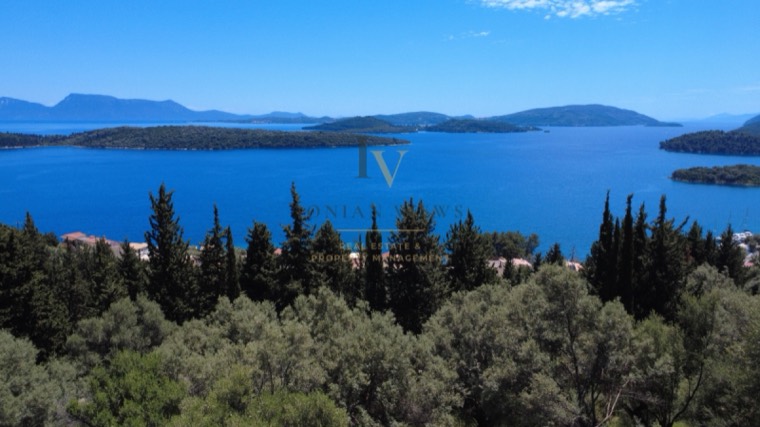
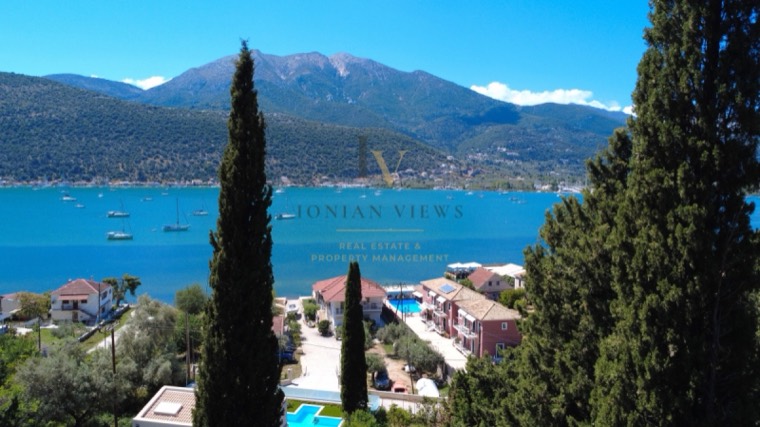
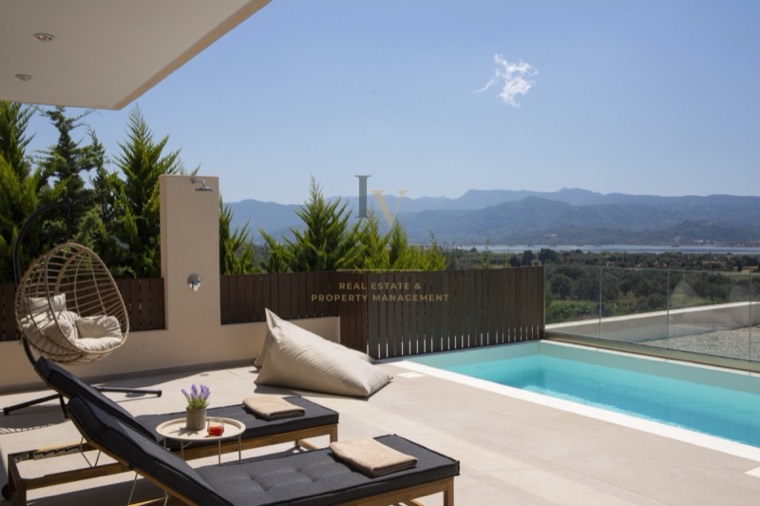
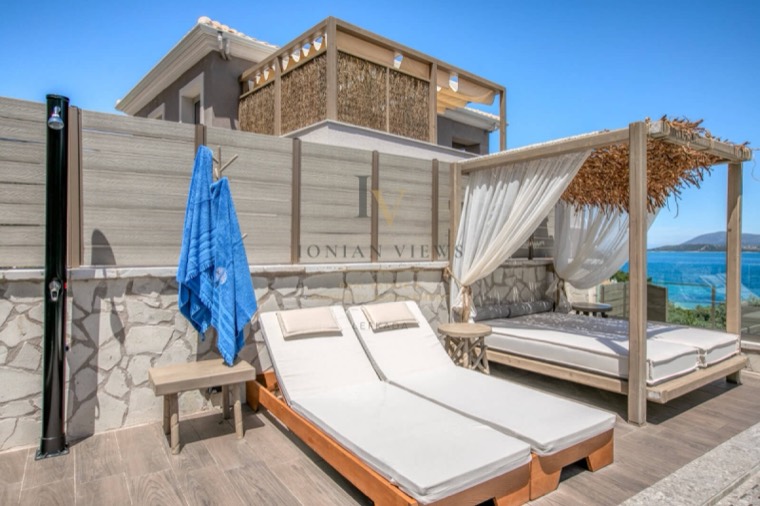
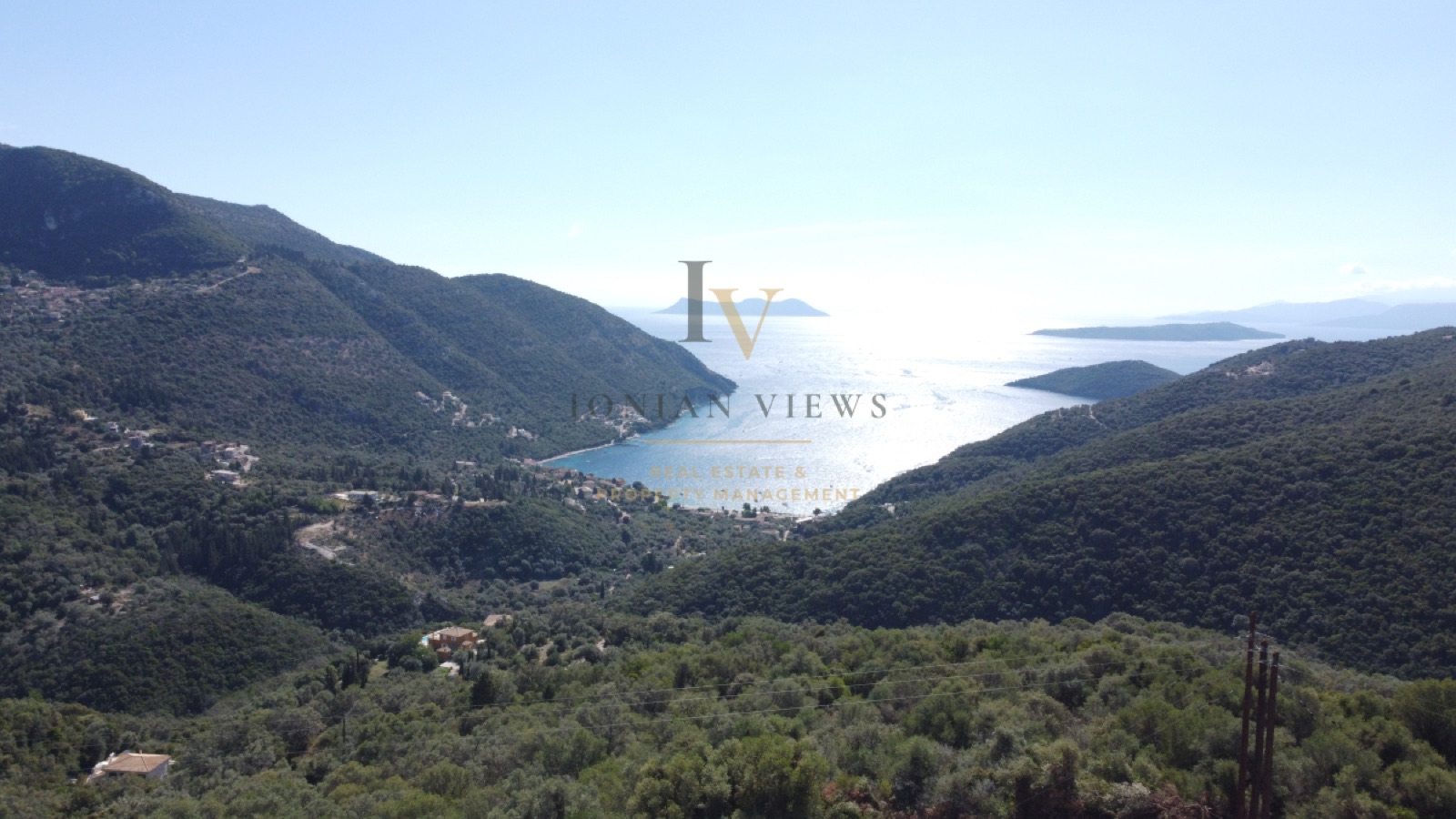
Many foreign buyers who come to Lefkada fall in love not with a particular house but with the landscape: a green hill, olive trees, a deep blue bay. From there, the idea of buying a plot and building a villa to your own taste is a short step. It is entirely possible, and sometimes even worthwhile, but building in Greece is a process with its own rules. A plot that looks perfect can turn out to be land on which you cannot build at all, or on which you may build only a much smaller house than you imagined.
In this guide, we will go step by step through what you need to check before buying land in Greece, how much you can build, what it costs, how long it takes, and when it may be better to buy a ready-made villa instead.
Step 1: Inside or Outside the Town Plan
The first question about any plot for sale in Greece is where it is located from a planning perspective. There are two main categories:
- εντός σχεδίου (inside the town plan): A plot within the boundaries of an approved city or village plan. The building rules are set by the plan itself: minimum plot size, building coefficients, height, and building lines. Usually the plots are smaller and infrastructure is nearby.
- εκτός σχεδίου (outside the town plan): A plot in an open area, outside settlement boundaries. Most plots with an open sea view in Lefkada fall into this category, and the rules are stricter.
There is also a third category worth knowing: small, older settlements whose boundaries were defined separately and which have their own rules. In 2025, a new presidential decree was published regulating building rules in settlements of up to 2,000 residents, so a plot in a small village requires a specific check of the current situation.
Step 2: Minimum Plot Size and Road Frontage
Outside the town plan, the well-known basic rule is that a plot must have an area of at least 4,000 m² and frontage onto a recognized public road in order to be buildable. There are exceptions to this rule: plots created before certain dates (under laws from the 1970s and 1980s) may sometimes be buildable even with a smaller area and limited frontage, provided that the date of their creation is proven with documents.
Several important points:
- A "road" must be a road officially recognized for building purposes; not every dirt track reaching the plot meets the requirement.
- A planning reform expected to come into force in 2027 is due to tighten building rules outside the town plan and change how roads are recognized. Anyone planning to buy now and build in a few years should take this into account.
- A 3,800 m² plot without proven rights is not "almost" a buildable plot. It is agricultural land.
A plot for which no permit can be issued is worth only a fraction of a plot with clear building rights. That is why this check comes before negotiating the price, not after.
Step 3: Building Coefficient (συντελεστής δόμησης) and How Much You Can Build
The building coefficient determines how many m² of built area are permitted relative to the plot area. Inside the town plan, the coefficient is set by the local plan and varies from settlement to settlement. Outside the town plan, for residential use, the allowance is determined on a sliding scale: the larger the plot, the smaller the relative building percentage.
In practice, for a 4,000 m² plot outside the town plan, it is common to speak of approximately 186 m² of built residential area. On larger plots the rights increase, but not proportionally, and there is a cap. In addition, there are restrictions on height (usually one or two storeys), coverage, and distances from plot boundaries. Certain areas are also subject to stricter regional plans.
It is important to know that some incentives that previously made it possible to "increase" the coefficient, such as green roofs, were struck down by the Greek Council of State at the end of 2024. Do not rely on old calculations by sellers or on advertisements promising large building rights. Ask an engineer for an up-to-date calculation for the specific plot.
Step 4: Forest, Archaeology, and Coastal Restrictions
Even a plot that meets the size and frontage rules may be restricted for other reasons:
- Forest and wooded areas: Greece has official forest maps (δασικοί χάρτες). A plot classified as forest or wooded land may be prohibited for residential construction. Even a plot with olive trees and cypresses needs to be checked against the map.
- Archaeology: In areas with known finds, approval from the archaeological authority is required, and it sometimes requires a test excavation before construction. This adds time and cost.
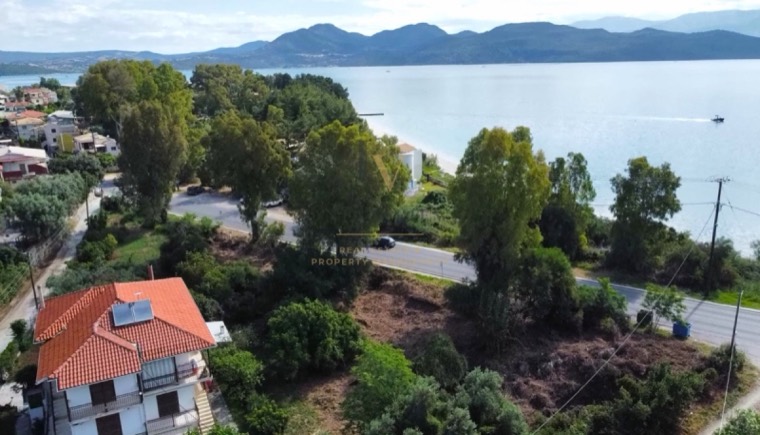
- Seafront: Construction is prohibited on the coastal strip (αιγιαλός) and the adjacent area, and outside the town plan an additional distance from the coastline is usually required. A "waterfront" plot is almost always restricted, which is why most villas with sea views are built on the hills above the coast.
- Land uses and Natura areas: In protected areas there are additional restrictions on the scale and type of construction.
Step 5: Water, Electricity, Road Access, and Slope
The practical side is no less important than the legal side. Before buying land in Greece, check:
- Water: Is there a connection to the municipal network nearby? If not, the options are a borehole (which requires a permit and does not always succeed) or a rainwater tank and water deliveries by tanker.
- Electricity: What is the distance to the nearest power pole? A connection requiring a long line can cost thousands to tens of thousands of euros and take months.
- Sewage: Outside the town plan, this almost always means a septic tank or a domestic treatment system, which must be included in the planning.
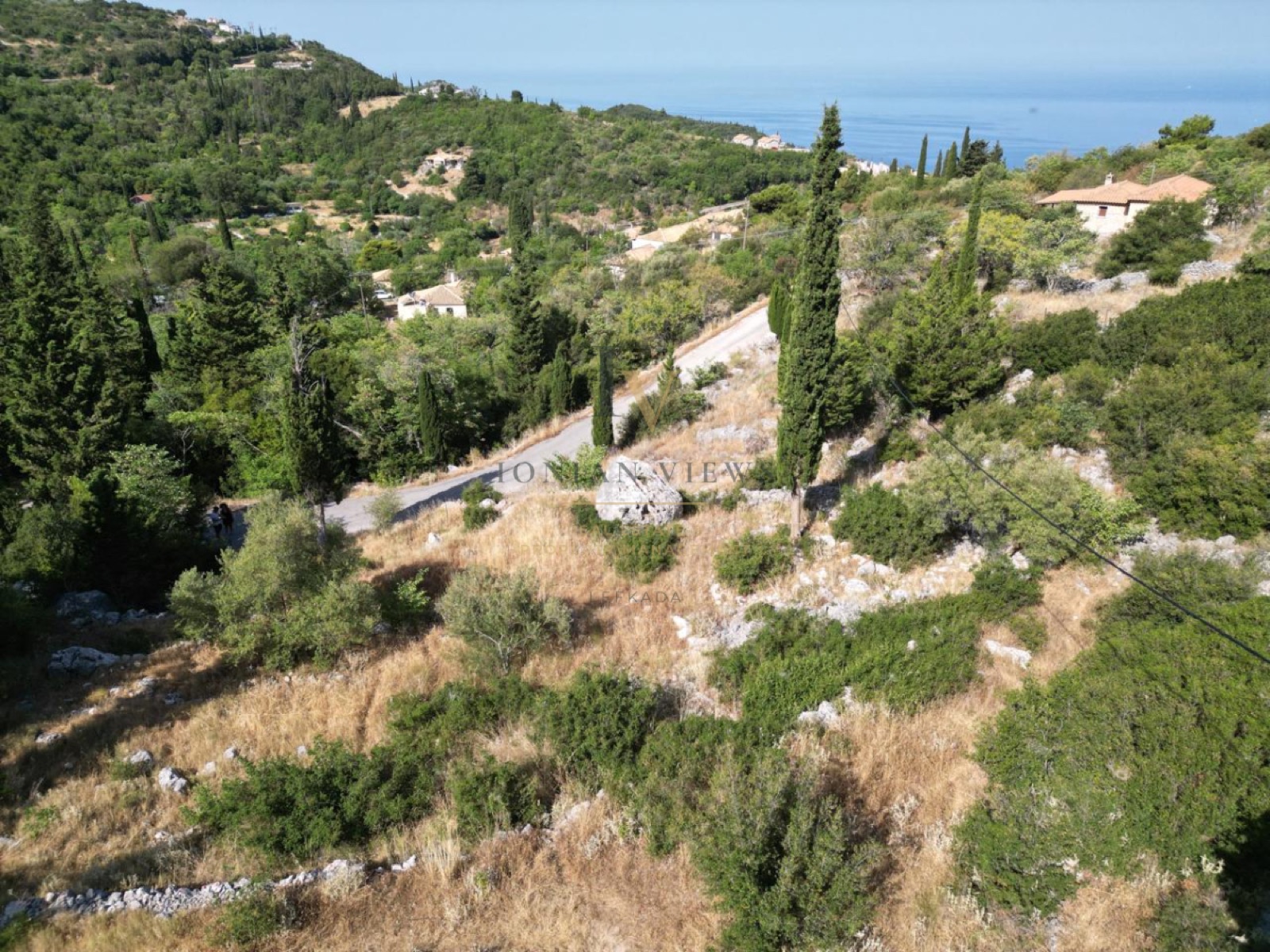
- Access: Can a concrete truck and heavy equipment reach the plot? A narrow, steep road makes the entire project more expensive.
- Slope: The plots with the most beautiful views are often also the steepest. A sharp slope requires retaining walls, excavation works, and complex foundations, and this can add tens of percent to the structural cost.
Step 6: Due Diligence Before Signing
Anyone buying a plot in Lefkada or anywhere else in Greece needs a team of at least three professionals:
- A local civil engineer: checks the plot's planning status, calculates the building rights, reviews the forest and coastal maps, and confirms that the plot is actually buildable.
- A surveyor: prepares an up-to-date topographic survey and checks it against the registration in the Κτηματολόγιο (the Greek land registry). Boundary discrepancies are common in Greece, especially in rural areas.
- A lawyer: checks the chain of ownership, mortgages, liens, and claims, and assists with the notary in the transaction itself.
It is possible, and sometimes advisable, to sign a preliminary agreement conditional on the results of the checks. This way you will pay hundreds or thousands of euros for the checks and will not risk buying a plot on which you cannot build. We covered the ancillary purchase costs, such as transfer tax and professional fees, in more detail in the guide Taxes and Costs When Buying Property in Greece.
Step 7: Building Permit in Greece and Timelines
The building permit process in Greece is currently carried out through the online e-Άδειες system, by a licensed engineer who submits the application on your behalf. Broadly speaking:
- Architectural and engineering design: An architect and engineer prepare drawings, structural calculations, and building services plans. Usually 2–4 months, depending on how many rounds of revisions you make.
- Preliminary approvals: As required, the architecture committee, archaeological authority, and forestry authority. This stage can take from a few weeks to six months or more.
- Issuance of the permit: Once all documents and approvals have been submitted, the permit itself is issued relatively quickly.
Overall, from purchase to having the permit in hand, it is realistic to expect 6–12 months, and longer for plots with special restrictions. The construction of a medium-sized villa itself usually takes 12–18 months. That means that from buying the plot to receiving the keys, it is usually two years or more.
How Much Does It Cost to Build a Villa in Greece?
Construction costs have risen in recent years, mainly due to material prices and a shortage of skilled workers. Estimates vary greatly depending on the level of finish, slope, and accessibility, but as guidelines for the Ionian Islands:
- Basic, simple construction: From approximately €1,200–1,500 per m².
- A villa with a good level of finish, "turnkey": Usually around €1,800–2,500 per m².
- A luxury villa with special materials, extensive glazing, and smart systems: €2,500–3,500 per m² and more.
To this you need to add a swimming pool (often tens of thousands of euros), landscaping, retaining walls, utility connections, architect and engineer fees (usually around 8%–12% of construction cost), permit fees, and VAT. A 150 m² villa with a pool can easily reach €350,000–500,000 excluding the plot.
Working with a Local Contractor
Choosing a contractor is perhaps the most important decision in the project, especially when you do not live locally. A few rules that work:
- Ask to see projects the contractor has completed, and speak with their owners.
- Sign a detailed contract with a technical specification, schedule, and payments tied to milestones rather than dates.
- Arrange for your own supervisor (usually the engineer who designed the project) to visit the site regularly and send reports and photos.
- Make sure all payments are made by bank transfer and that workers are legally insured; otherwise you may bear liability.
Here, local support makes a big difference. At Lefkada Properties, we work in partnership with a local Greek real-estate agency and know the engineers, contractors, and authorities on the island, so you receive a clear picture in your language at every stage.
Plot and Construction or a Ready-Made Villa?
There is no single right answer. Here is the comparison in brief:
The advantages of buying a plot and building:
- Design precisely according to your needs and taste.
- A new house, with insulation, energy efficiency, and up-to-date systems.
- Sometimes a lower total cost than an equivalent new villa, especially in sought-after locations.
- The ability to spread the investment over time.
The disadvantages:
- A long process, usually two years or more, and bureaucratic uncertainty.
- Risk of budget and schedule overruns.
- Requires involvement, travel, and many decisions made remotely.
- If the goal is a Golden Visa, it is important to check in advance how the purchase and construction meet the programme's conditions.
A ready-made villa suits those who want to enjoy it in the coming season or start renting it out quickly. A plot suits those who have patience and a clear vision. You can see both options side by side on our Villas page and in the guide Real Estate Investment in Lefkada.
Common Mistakes Made by Foreign Buyers
From our experience supporting clients, these are the mistakes that come up repeatedly:
- Relying on the seller's word regarding building rights. Even a seller acting in good faith does not always know the current planning status. Only an engineer's opinion is decisive.
- Falling in love with the view and ignoring access. A plot reached by a steep dirt road will cost much more to build on, and sometimes will not meet the road frontage requirement.
- Planning a budget without a buffer. In construction in Greece, as anywhere, it is advisable to leave a reserve of 10%–15% for surprises.
- Choosing a contractor based on the lowest price. An especially cheap offer usually hides an incomplete specification or extras that will come later.
- Waiting to plan. Because of the expected changes to planning rules, anyone planning to build should start the permit process without postponing it for years.
The Lefkada Properties team helps you avoid these mistakes already at the plot-selection stage, even before you pay a deposit.
What You Can Find in Lefkada Today
The range of plots in Lefkada is very wide. On the Lefkada Properties website, plots are currently offered from approximately €19,000, for example a 454 m² plot within a village, up to approximately €800,000 for a plot of more than 10,000 m² with an open sea view. The price depends mainly on the view, proximity to the beach, access, and above all building rights, which ultimately determine the true value of the land.
You can find all available plots, with details of area and location, on the Plots for Sale in Lefkada page. If you have found a plot that interests you, even through another party, contact us and we will help you check it before you commit.
The information in this article is general and does not constitute legal, engineering, or tax advice. Planning rules in Greece change and depend on the exact location of each plot. Before purchasing or planning construction, verify the details with a licensed civil engineer and lawyer in Greece.
Frequently asked questions
What is the minimum plot size for building outside the town plan in Greece?
+
The basic rule is 4,000 m² with frontage onto a recognized public road. There are exceptions for older plots created before certain dates, so every plot requires a check by a local engineer.
How many square metres can be built on a 4,000 m² plot?
+
Outside the town plan, it is common to speak of approximately 186 m² of built residential area on a 4,000 m² plot. On larger plots the rights increase, but not proportionally, and they also depend on regional plans and local restrictions.
How much does it cost to build a villa in Lefkada?
+
A villa with a good level of finish usually costs around €1,800–2,500 per m², and a luxury villa more than that. You need to add a pool, landscaping, utilities, designer fees, and VAT.
How long does it take to obtain a building permit in Greece?
+
Usually 6–12 months from the start of planning until the permit is in hand, and longer if archaeological or forestry approvals are required. Construction itself usually takes 12–18 months.
Can a foreigner buy a plot and build in Greece?
+
Yes, foreign nationals can buy land and build in Greece. In certain border areas a special permit is required, and a local lawyer will check whether it applies to the plot you have chosen.
Want personal guidance buying property in Greece?
The Lefkada Properties team will guide you in your language – from choosing the property, through the legal checks, to receiving the keys. The first consultation is free.