
Contents ⌄
- Why Real Estate in Greece in 2026
- Step 1: Choosing an Area and Property Type
- Step 2: Viewing Properties in Person
- Step 3: Greek Tax Number (AFM) and Bank Account
- Step 4: Independent Greek Lawyer
- Step 5: Due Diligence – Cadastre, Registry and Engineer
- Step 6: Preliminary Agreement and Deposit
- Step 7: Final Contract Before a Notary and Payment of Taxes
- Step 8: Registration in the Cadastre and Receiving the Keys
- How Long Does the Whole Process Take?
- Remote Purchase with Power of Attorney
- Common Mistakes to Avoid
- After the Purchase: Managing the Property from Abroad
- How Lefkada Properties Supports You
Buying a property in Greece is one of the most popular real estate decisions among foreign buyers in recent years. A short flight, a familiar Mediterranean climate, prices that are still significantly lower than in your home country, and a relatively transparent market open to foreign buyers. And yet, buying a house in Greece as a foreign buyer is not the same as buying an apartment in your home city: there is a Greek tax number, a local bank account, a notary, the cadastre and an engineer, and each of them is a step you cannot skip. In this guide we have brought together the entire process, from choosing an area to receiving the keys, with a special focus on Lefkada and the Ionian coast in western Greece.
Why Real Estate in Greece in 2026
The Greek market has recovered over the past decade and has become a sought-after destination for investors from across Europe and beyond. For foreign buyers there are several clear advantages: a short flight from your home country, no restriction on buying residential property by foreign citizens (except certain border areas where special approval is required), and an orderly legal process based on government registration.
Real estate investment in Greece suits several types of buyers: those looking for a family holiday home, those who want a property that will generate income from short-term rentals during the summer season, and those interested in the Greek Golden Visa and the residency rights it grants.
It is also important to follow regulatory changes. In November 2026, a law was published in Greece raising the purchase tax on residential properties bought by individuals who are tax residents outside the European Union, including buyers from abroad, from about 3% to about 15%, for sale deeds signed from July 1, 2027. According to reports, plots and commercial properties are not included in the increase. The practical implication: those considering buying a house in Greece will benefit from completing the transaction before that date. Full details are in the guide Taxes and Costs in Buying Property in Greece, and the latest details should be verified with a Greek lawyer.

Step 1: Choosing an Area and Property Type
Before you start scrolling through listings, it is worth answering a few questions: Is the property intended for personal use, for rental, or for a combination of the two? How much time will you spend there each year? Is access to an international airport important to you, or do you prefer peace and quiet away from the tourist crowds?
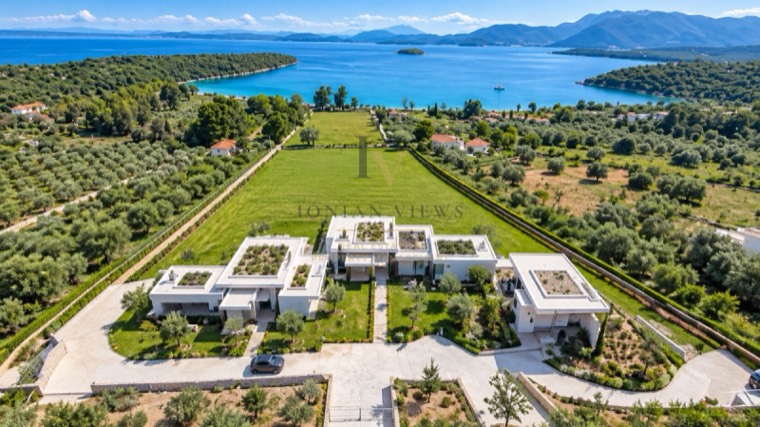
Athens and Thessaloniki suit those looking for a city apartment with annual yield. The popular Aegean islands, such as Mykonos and Santorini, are very expensive and crowded in summer. The Ionian coast, and especially Lefkada, offers a combination that is hard to find elsewhere: turquoise bays, green vegetation, land access via a bridge from the mainland and a nearby airport in Preveza. We covered this in more detail in the article Real Estate Investment in Lefkada.
In terms of property type, there are three main options:
- A villa or existing house – the fastest way to start enjoying the property. You can see the available options in Villas and Houses for Sale in Greece.
- An apartment in a building or complex – a lower entry cost and simpler maintenance, but less privacy.
- A building plot – full flexibility in planning, but also a longer and more complex process, including checking building rights, architectural planning and obtaining a permit.
Step 2: Viewing Properties in Person
Photos online do not tell the whole story. A steep access road, neighbors that are too close, noise from a main road or a lack of connection to water and electricity are things you discover only when you arrive. Our recommendation is to plan a focused trip of a few days, view 6–10 preselected properties and visit the area at different times of day.
At Lefkada Properties, before every viewing we prepare a shortlist filtered according to your budget and needs, and accompany you on site in your language together with our partners from the local Greek agency. This way you do not waste time on unsuitable properties and get a realistic picture of the neighborhood, prices and rental potential.
Step 3: Greek Tax Number (AFM) and Bank Account
You cannot buy a property in Greece without an AFM, a Greek tax identification number. Without it, you cannot sign a contract before a notary, pay the purchase tax or register the property in your name. The number is issued free of charge by the Greek tax authority (AADE), and in most cases it can be obtained through a lawyer holding a power of attorney, without physically visiting the tax office.
After receiving the AFM, you open a Greek bank account. The account is used to transfer funds from your home country, pay taxes and fees and later also for ongoing payments such as electricity, water and municipal tax. Banks usually ask for a passport, AFM, proof of residential address and sometimes an explanation of the source of funds, so it is advisable to prepare in advance documents showing where the money came from (for example, a property sale, savings or inheritance). Transferring the purchase price from a documented bank account is important both for compliance with anti-money laundering rules and in case you want to sell the property in the future.
Step 4: Independent Greek Lawyer
Greek law does not require you to hire a lawyer, but anyone familiar with the market will warmly recommend it. It is important that the lawyer be independent, meaning they represent only you and not the seller or the agent. The fee is usually around 1%–1.5% of the property price, depending on the scope of work and the complexity of the transaction.
The lawyer's roles include:
- Obtaining the AFM and assisting with opening the bank account
- Checking ownership and registration in the cadastre and land registry
- Checking for liens, seizures, debts and planning restrictions
- Drafting the preliminary agreement and representing you before the notary
- Registering the property in your name after signing
Step 5: Due Diligence – Cadastre, Registry and Engineer
This is the stage where most costly mistakes are avoided. The checks are carried out on two tracks in parallel.
Legal Check
The lawyer checks the Greek Cadastre (Ktimatologio) and the land registry to see who the registered owners are, whether there is a lien, mortgage or seizure, and whether the plot boundaries match what has been presented to you. The national cadastre has been almost completed in recent years, but in some areas a comparison between the new registration and older records is still required. Forest classification, archaeological restrictions, proximity to the coastline and building restrictions are also checked.
Engineering Check
A licensed engineer checks that the actual construction matches the building permit. In sale transactions, an engineer's declaration on the legality of the structure is required, and today also an 'electronic property identity' that consolidates the technical and planning data. If building irregularities are found, for example a balcony that was enclosed or a floor added without a permit, it is necessary to check whether they can be regularized and who bears the cost of regularization. It is also advisable to request an energy performance certificate, which is mandatory in a sale transaction.
Rule of thumb: do not transfer a single euro to the seller before your lawyer has completed the ownership check and provided you with a written opinion.
Step 6: Preliminary Agreement and Deposit
When the checks are satisfactory and the price has been agreed, it is customary to sign a preliminary agreement and pay a deposit, usually about 10% of the property price. The agreement sets out the price, the timetable for the final signing, the cancellation terms and what happens to the deposit if either party withdraws. In simple transactions it is possible to skip this stage and go directly to the final contract, but when there are still documents to complete, the preliminary agreement protects both parties.
Make sure the agreement is drafted or reviewed by your lawyer and that you have a full translation of it. Signing a document in Greek that you did not fully understand is one of the most common mistakes.
Step 7: Final Contract Before a Notary and Payment of Taxes
In Greece, only a contract signed before a notary transfers ownership. Before signing, the property transfer tax is paid, currently about 3.09% (3% plus a municipal levy), calculated on the higher of the transaction price and the 'objective value' set by the state. New properties are subject to different rules regarding VAT, and the lawyer will check what applies in your case.
The notary's fee is a small percentage of the property price (around 1%, on a sliding scale that decreases as the value rises) plus VAT. At the signing, the balance of the purchase price is transferred, usually by bank check or documented bank transfer. You will find the full picture of the costs, including the annual property tax ENFIA, in the guide Taxes and Costs in Buying Property in Greece.
Step 8: Registration in the Cadastre and Receiving the Keys
After signing, the lawyer or notary submits the contract for registration in the cadastre, and only with registration is your ownership legally complete. Registration fees usually amount to about half a percent of the value. After that, you transfer the electricity and water accounts into your name, arrange insurance and move into the property.

How Long Does the Whole Process Take?
In most cases, from the moment you find the property until you receive the keys, two to four months pass. Obtaining the AFM and opening a bank account usually take a few weeks. The legal and engineering due diligence requires another few weeks, and for properties with building irregularities, unsettled inheritances or registration issues, the time may be longer. If you start the bureaucratic arrangements in parallel with the property search, you can shorten the timetable considerably.
Remote Purchase with Power of Attorney
Not all buyers can fly to Greece for every stage, and there is no need to. You can sign a power of attorney in favor of the Greek lawyer, allowing them to obtain the AFM, open a bank account (at banks that permit this), carry out the checks and even sign the final contract before the notary on your behalf.
The power of attorney is signed before a notary in your home country, certified with an apostille stamp and translated into Greek. Alternatively, it can be signed at the Greek consulate. It is advisable to draft it in advance and precisely: which actions it authorizes, for which property and for what period. Most buyers we assist at Lefkada Properties come once to view and select the property, and complete the rest of the process remotely, while we update them in your language at every stage.
Common Mistakes to Avoid
- Relying on the seller's lawyer – an inherent conflict of interest. An independent lawyer is relatively cheap insurance.
- Skipping the engineer's check – building irregularities are common in Greece, and responsibility for regularizing them may pass to you.
- Paying a deposit before the ownership check – even when the seller is pressing and 'there are other buyers'.
- Ignoring the objective value – taxes are calculated on it when it is higher than the transaction price, and this affects the budget.
- Transferring money from undocumented sources – this may delay the opening of the bank account and the entire transaction.
- Not planning the tax aspect in your home country – rental income from abroad and foreign properties must be reported to the tax authority in your home country. It is advisable to consult an accountant in your home country even before the purchase.
- Buying a plot without checking the building rights – not every plot with a view allows you to build the villa you imagined. A planning check before purchase saves unpleasant surprises.
After the Purchase: Managing the Property from Abroad
Receiving the keys is not the end of the road. Property owners in Greece pay the annual property tax ENFIA, file a Greek tax return if the property is rented out, and take care of routine maintenance of the garden, pool and systems. Those planning to rent to tourists must register the property in the short-term rental register and obtain a registration number before advertising on booking sites. Most foreign owners work with a local management company that handles cleaning, guest check-in and repairs, and with a Greek accountant who files the returns. It is worth building this annual budget even before the purchase, so that the yield you calculated is realistic.
How Lefkada Properties Supports You
We work in cooperation with a local Greek real estate agency in Lefkada and on the Ionian coast, and support foreign buyers in your language throughout the entire process: defining your needs, shortlisting properties, viewing on site, connecting you with independent lawyers and engineers, negotiation, and support through signing and receiving the keys. Our goal is simple: that you buy the right property, at a fair price, without surprises.
Want to get started? Take a look at all our properties or leave your details and we will get back to you for an introductory call.
The information in this article is general only, updated for 2026, and does not constitute legal, tax or financial advice. Laws, tax rates and fees in Greece and in your home country change from time to time. Before any purchase, you should verify the latest details with a lawyer and accountant in Greece and in your home country.
Frequently asked questions
Are foreign buyers allowed to buy property in Greece?
+
Yes. Foreign citizens can buy apartments, houses and plots in Greece, and only in certain border areas is special approval from the authorities required.
Do you have to travel to Greece to buy a property?
+
Not necessarily. With a power of attorney certified by apostille, you can authorize a Greek lawyer to carry out almost all the stages, including signing before the notary. Most buyers nevertheless prefer to visit at least once to see the property.
How much are the additional purchase costs?
+
As of 2026, the transfer tax, notary fee, lawyer fee and registration usually total about 5%–7% of the property price, before the brokerage commission. The exact rate depends on the property type and value, and expected legislative changes may affect buyers who are not EU citizens.
What is the difference between the cadastre and the engineer's check?
+
The cadastre verifies who the legal owners are and what the plot boundaries are. The engineer checks that the building itself was constructed according to the permit and that there are no building irregularities.
Can a non-resident get a mortgage in Greece?
+
Greek banks sometimes provide financing to non-residents, but under strict conditions and with a relatively low loan-to-value ratio. Most foreign buyers finance the purchase with their own capital or with a loan from their home country.
Want personal guidance buying property in Greece?
The Lefkada Properties team will guide you in your language – from choosing the property, through the legal checks, to receiving the keys. The first consultation is free.