Contents ⌄
- Winter in Lefkada versus summer: what the year really looks like
- Medicine and healthcare: what is on the island and what is on the mainland
- Schools and education for children
- Internet and remote work from Lefkada
- Transport: car, bridge and flights
- Cost of living in Greece and Lefkada
- Community, language and bureaucracy
- A permanent home in Greece: how to choose a house for year-round living
- How to get started
In August it is hard to imagine Lefkada empty. The roads to the west coast are busy, the restaurants in Nidri are full until midnight and the promenade in Lefkada town is bustling until late. But anyone considering living in Lefkada all year round also needs to know November and February: rainy days, quiet villages, many closed shutters and an island that becomes a small Greek community again. That is not necessarily a disadvantage, and there are plenty of people looking for exactly that. It is just worth knowing what you are getting into.
In this guide we have gathered what we at Lefkada Properties hear from clients who have moved to the island, and what we have checked ourselves: what winter in Lefkada looks like, what stays open, healthcare, schools, internet, transport, cost of living and how to choose a home that suits permanent residence and not just a holiday. We covered the bureaucratic side of the move, such as visas and residence permits, in more detail in the guide relocating to Greece from abroad.
Winter in Lefkada versus summer: what the year really looks like
The climate in Lefkada is Mediterranean, but winter is wetter than foreign buyers are used to. The Ionian Islands are among the rainier parts of Greece, and most rain falls between October and March. According to average climate data, in November, December and January Lefkada usually receives more than 100 mm of rain per month, and sometimes much more. Temperatures are mild: in January, the coldest month, the average ranges from about 9 to 14 degrees. Snow on the coast is rare, but in mountain villages such as Karya, Agios Petros or Lazarata it is noticeably colder, and sometimes it snows too.
What changes the experience more than the weather is seasonality. Most hotels, beach bars and tourist restaurants close at the end of October and reopen in April or May. Shops aimed at tourists close as well. What stays open is what serves residents: supermarkets, bakeries, pharmacies, garages, banks, government offices and some local cafes and tavernas.
Which areas are lived in all year
- Lefkada town. The capital and the real center of the island. There is activity all year: a market, cafes, schools, the hospital and most services. Anyone who wants a comfortable winter routine starts here.
- Nidri. The second-largest town. In winter it is much quieter, but it has permanent residents, supermarkets and basic services, and it is about a quarter of an hour's drive from Lefkada town.
- The villages around the town, such as Afrini, Kalligoni, Lygia and Exanthia. They are close enough to services, and some have a permanent population.
- Nikiana, Vasiliki and the west coast. Some parts are very touristy. In winter many businesses are closed, and in some neighborhoods most houses are empty. You can live there, but you need to plan regular trips to town.
Medicine and healthcare: what is on the island and what is on the mainland
Lefkada General Hospital is about 1.5 km from the town center. It handles emergencies, inpatient care and basic departments such as internal medicine, surgery, pediatrics and orthopedics, and in some fields there are clinics with specialist doctors who visit on fixed days. In addition to the hospital, there is a health center and rural clinics on the island, as well as private doctors, dentists and laboratories in the town.
For more complex treatments, advanced tests or certain specialists, island residents usually travel to the hospital in Preveza, which is a short drive from the bridge, or to the University Hospital of Ioannina, about a two-hour drive. In some cases they go as far as Athens. This is a significant difference from what foreign buyers are used to, and it is especially worth considering if your family has ongoing medical needs.
On insurance: those working in Greece as employees or self-employed and paying Greek social security are usually entitled to public healthcare. Most foreign buyers who relocate on a financially independent person visa or a Golden Visa are required to show private medical insurance valid in Greece, and many keep it afterwards. Good private insurance gives access to private clinics and hospitals in Ioannina and Athens, and sometimes medical evacuation. It is worth checking the policy terms before the move, not after.
Schools and education for children
Lefkada has a full Greek public education system: kindergartens, primary schools, middle schools and high schools, most in Lefkada town and the larger villages. Education is free and the language is Greek. Based on what we found, there is no international school on the island. International schools in Greece are mainly concentrated in Athens and Thessaloniki.
What this means in practice:
- Younger children usually integrate relatively quickly into the Greek system. After a year or two, many speak fluent Greek.
- Children of middle- and high-school age find it harder, and the transition requires language support. Some families add private Greek lessons.
- Online schooling. Some families choose an online school in English, an online framework from their home country, or homeschooling. The rules on homeschooling in Greece are not simple, so it is worth clarifying the legal status before starting.
If you have school-age children, this is probably the most important question when deciding on a permanent home on the island, and it is worth visiting the local school before choosing a house.
Internet and remote work from Lefkada
For most people who live in Lefkada all year and earn their living from remote work, internet is a basic requirement. The situation is reasonable, but varies greatly from address to address. In Lefkada town and some of the larger settlements there is wired infrastructure, and in some places fiber optic too. In remote villages and isolated houses, the infrastructure is weaker.
These are the common options:
- A wired line or fiber optic through providers such as Cosmote, Vodafone and Nova, where infrastructure exists
- Fixed wireless internet over a mobile network (4G/5G), which providers offer as a solution for areas without a wired line. Coverage varies by location and terrain
- Starlink, which has become a common solution in isolated houses and mountain villages
- Mobile backup. Many people who work from home keep an extra data package for stormy days and power cuts
The most important tip: before you buy or rent, check infrastructure availability at the exact address with the providers, and if possible run a speed test in the house itself. In winter there are occasional short power cuts, so a UPS for the router can save a fair amount of stress during work calls.
Transport: car, bridge and flights
You need a car in Lefkada. Public transport on the island is limited, and in winter the frequency drops further. Most residents have a private car, and many families have two.
Lefkada's big advantage over other islands is its connection to the mainland. The island is connected to the Greek mainland by a short bridge, so no ferry is needed. From the bridge it is about 20 km to Aktion Airport (Preveza), about a 15- to 20-minute drive from Lefkada town. Ioannina is about a two-hour drive, and Athens about a five-hour drive by car, or by KTEL bus that leaves the island for Athens daily.
Flights are the point to plan carefully. Aktion Airport is highly seasonal: in summer there are many flights from Europe, and in recent years also direct flights from various countries by several airlines. Flights from abroad usually operate only in the summer months and early autumn, and schedules change from year to year. In winter, the usual way to fly to your home country is via Athens: a drive to Athens or a connecting flight, and from there a flight onward. Anyone planning to live on the island and fly to their home country frequently should allow a travel day in each direction in winter.
Cost of living in Greece and Lefkada
The cost of living in Lefkada is lower than in your home country in most areas, but not all. A few points for planning:
- Supermarket. The island has supermarkets from Greek and European chains and local shops. Seasonal fruit and vegetables, olive oil, cheeses and local fish are usually cheaper than in your home country. Imported products, and some cleaning and personal-care products, can be more expensive.
- Electricity. Electricity prices for household consumers in Greece currently range from about €0.14 to €0.24 per kWh, depending on the tariff and whether all charges and taxes are included. Prices change from month to month, and a winter bill in an electrically heated home can be very high.
- Heating. This is the item that surprises foreign buyers most. Most homes are heated with heat pumps (high-efficiency air conditioners), wood-burning stoves or fireplaces, and in some homes with central diesel heating. Firewood is bought from local suppliers before winter. In a home without insulation, the monthly winter heating bill can reach hundreds of euros.
- Car and fuel. Fuel in Greece is relatively expensive, and since it is hard to manage without a car, it is a fixed budget item.
- Rentals. In winter it is easier to find a long-term rental, but as summer approaches many property owners prefer to rent to tourists. Anyone renting should make sure the contract is for a full year.
We detailed recurring property taxes, including ENFIA, and purchase costs in the guide Property taxes and costs in Greece.
Community, language and bureaucracy
Lefkada has a small but active community of foreigners who live on the island all year: British, German, Dutch, Scandinavian and Italian, as well as international families. Some are retirees, some work remotely and some run local businesses. Facebook and WhatsApp groups of foreign residents are an excellent source of recommendations for tradespeople, doctors and services.
That said, anyone who really wants to integrate should learn Greek. In summer almost everyone speaks English, but in winter, at government offices, the garage or the school, the local language opens doors. The Greeks in Lefkada are warm and welcoming, and greatly appreciate an effort, even a basic one, to speak their language.
Bureaucracy in Greece is notoriously difficult, and on a small island it is even more personal. Many matters are settled through contacts and patience. Most processes, such as a tax number (AFM), a bank account, registration with the authorities and electricity and water connection, go much more smoothly with the help of a local accountant or lawyer. It is worth building such a relationship from the very first stage.
A permanent home in Greece: how to choose a house for year-round living
A house that is wonderful for two weeks in August is not necessarily suitable for winter. When looking for a permanent home in Lefkada, pay particular attention to the following points:
- Insulation. Many older houses, and some holiday homes, are built without proper insulation. Check walls, roof and double-glazed windows. Good insulation saves money and adds comfort every winter.
- Heating system. Ask how the house is actually heated and what the winter bills were. An efficient heat pump, a wood-burning stove or underfloor heating is a real advantage.
- Orientation and sun. A south-facing house gets sun in winter and stays warmer and drier. Houses in narrow valleys or on the northern side of a mountain can be damp and cold.
- Damp and mold. Visit the house after rain if possible. Signs of moisture on walls are a warning worth taking seriously.
- Proximity to town. Ten or twenty minutes' drive to Lefkada town is everyday convenience in winter, for shopping, school and the doctor.
- All-weather access. A steep dirt road that looks picturesque in July can be problematic in heavy rain.
- Infrastructure. Internet, water, stable electricity, and in isolated houses also a septic tank and a properly functioning water system.
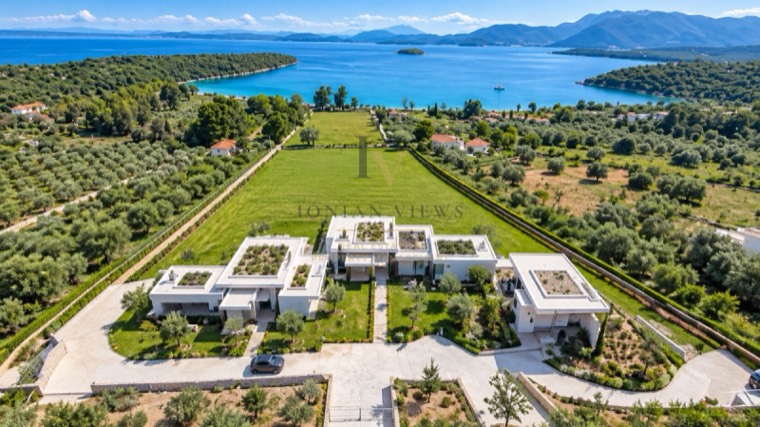
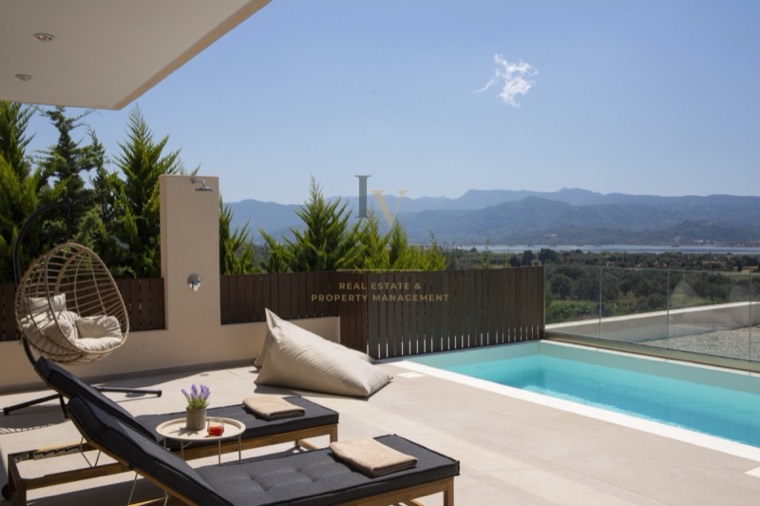
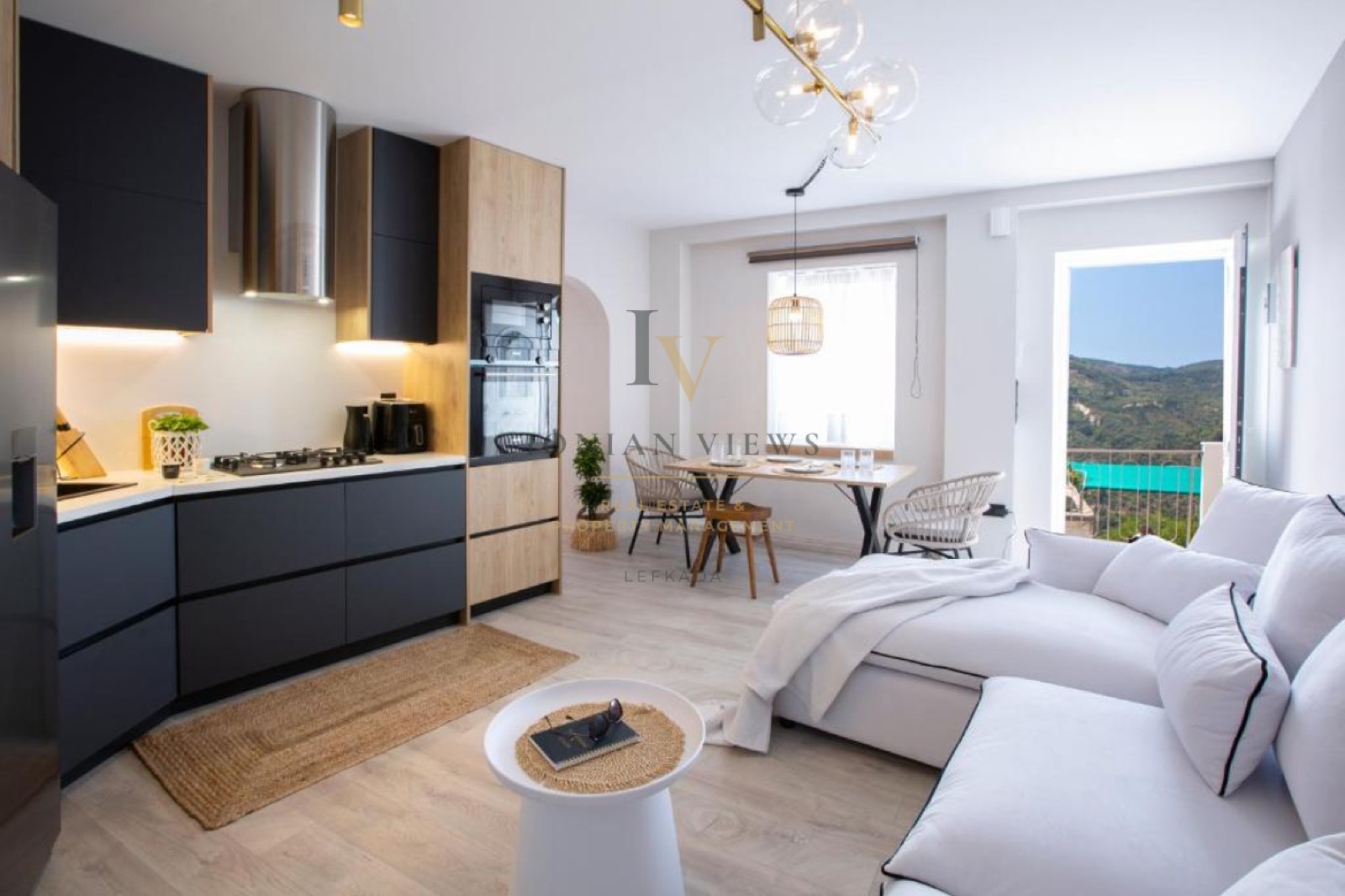
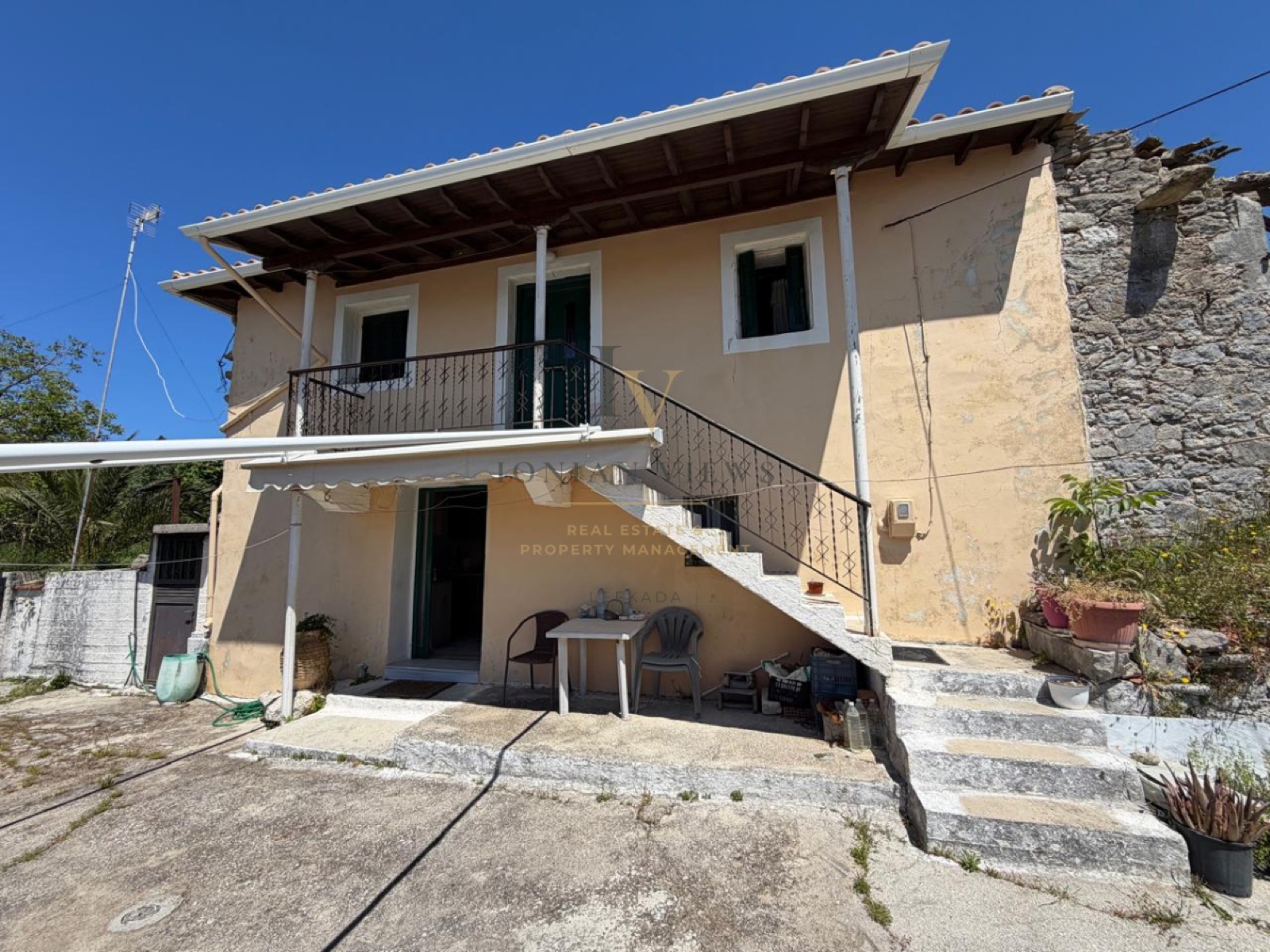
The renovated apartment in Exanthia in the photo above is a good example of a home that works all year: close to town, bright and with a well-equipped kitchen. The village house in Lazarata offers character and atmosphere, but living in a mountain village requires more preparation for winter. At Lefkada Properties we help clients assess properties from this perspective too, not just by the view. You can start with properties currently available, and anyone who prefers to build a new, properly insulated house should read the guide Buying land and building in Greece.
How to get started
The best way to know whether life in Lefkada suits you is simple: come in winter. Rent an apartment for a month or two between November and March, live in it like a resident, shop, drive in the rain, test the internet and talk to foreigners who already live on the island. After a winter like that, your decision will be far better informed than after any summer visit.
The Lefkada Properties team supports foreign buyers who want to live in Lefkada, in your language and throughout the process: from getting to know the different areas, through choosing a home that suits both winter and summer, to legal checks together with the local agency. Want to hear which area suits you? Contact us or read more about Lefkada island.
The information in this article is general and does not constitute legal, tax or investment advice. Details such as flight schedules, energy prices, healthcare services and education rules change, and before any decision you should verify the details with a Greek lawyer and accountant and with the official authorities.
Frequently asked questions
What stays open in Lefkada in winter?
+
Most hotels, beach bars and tourist restaurants close between late October and spring. Supermarkets, pharmacies, banks, government offices, the hospital and some local cafes and tavernas operate all year, mainly in Lefkada town and Nidri.
Is there a hospital in Lefkada?
+
Yes. Lefkada General Hospital is located near the town and handles emergencies, inpatient care and basic departments. For complex treatments and some specialists, people travel to Preveza, Ioannina or Athens.
Is there an international school in Lefkada?
+
Based on what we found, no. The island has a Greek public education system, and international schools in Greece are mainly concentrated in Athens and Thessaloniki. Some families combine online schooling, but it is worth checking its legal status in Greece.
Can you work remotely from Lefkada?
+
Yes, and many people do. In the town and some settlements there is wired and fiber infrastructure, and in remote areas people use fixed wireless internet or Starlink. It is important to check availability at the exact address before buying or renting.
Are there direct flights from abroad to Lefkada in winter?
+
Direct flights from abroad to Aktion Airport (Preveza) usually operate only in summer and early autumn, and schedules change from year to year. In winter, people usually fly via Athens.
Want personal guidance buying property in Greece?
The Lefkada Properties team will guide you in your language – from choosing the property, through the legal checks, to receiving the keys. The first consultation is free.