Contents ⌄
- Why so many properties in Lefkada are sold at the construction stage
- The advantages of a new property from a developer in Greece
- The risks of off-plan buying
- Building permit in Greece: what to check before paying
- Deal structure: preliminary contract, final contract and staged payments
- VAT on a new property in Greece and transfer tax
- Delivery: certificates, connections and the building's electronic identity
- Golden Visa and a property under construction
- How to get started
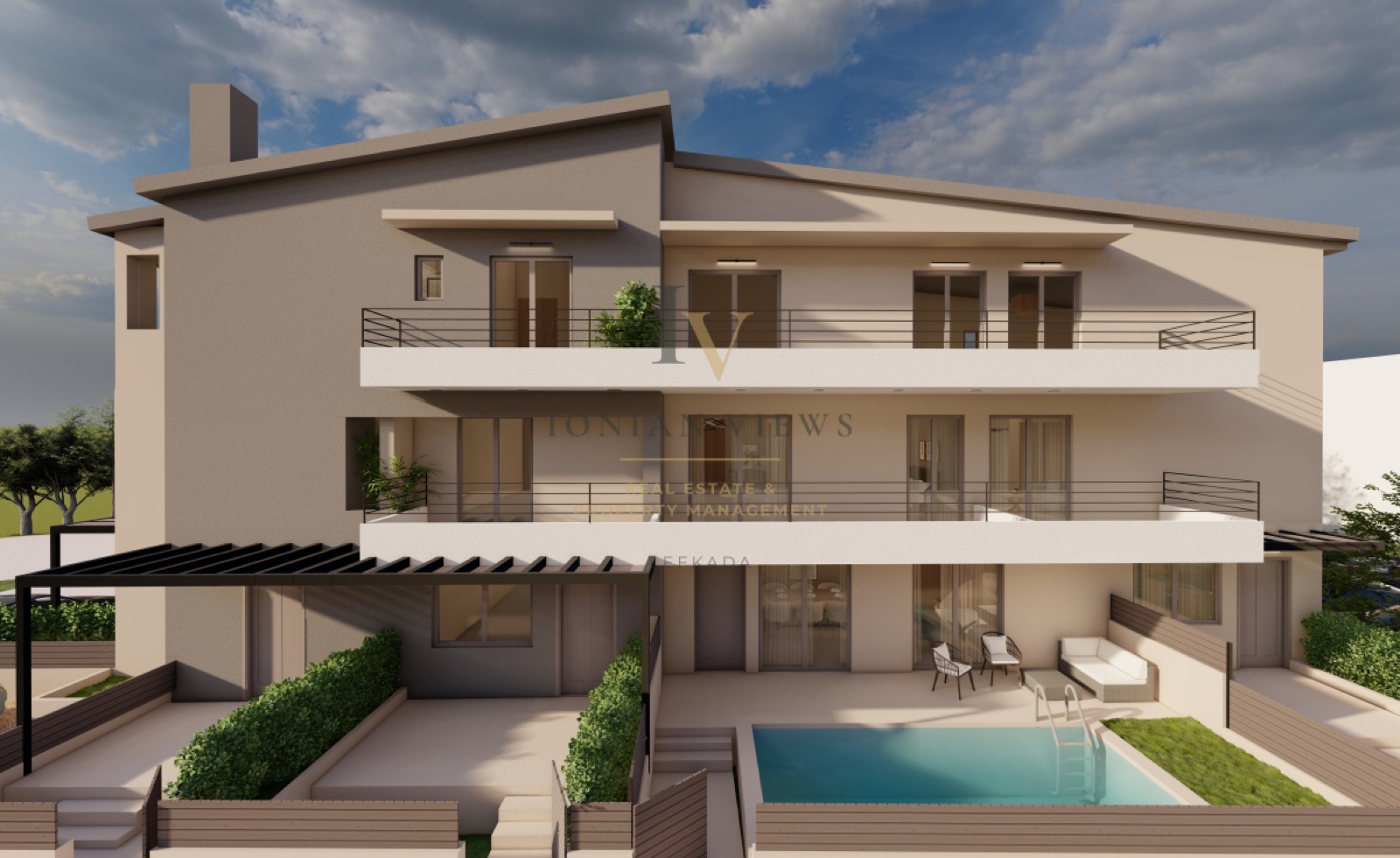
In recent years, more and more new developments have been built in Lefkada: small apartment buildings in the town, duplex complexes near the beaches in the south, and luxury villas with bay views. A large share of these properties are sold before construction is complete, and sometimes even before the foundations have been dug. Off-plan buying in Greece can save money and give you a completely new home to your taste, but it also requires due diligence that buyers of a second-hand apartment do not need to carry out.
Anyone who has bought an apartment from a developer in your home country may be used to sale-law protections, bank guarantees and bank supervision of the project. In Greece the situation is different, and protection depends mainly on the contract you sign and the checks your lawyer carries out. In this guide we have summarised what the Lefkada Properties team checks with our buyers before they commit to an apartment under construction in Greece: the advantages, the risks, the contract structure, the taxes and what happens on delivery day.
Why so many properties in Lefkada are sold at the construction stage
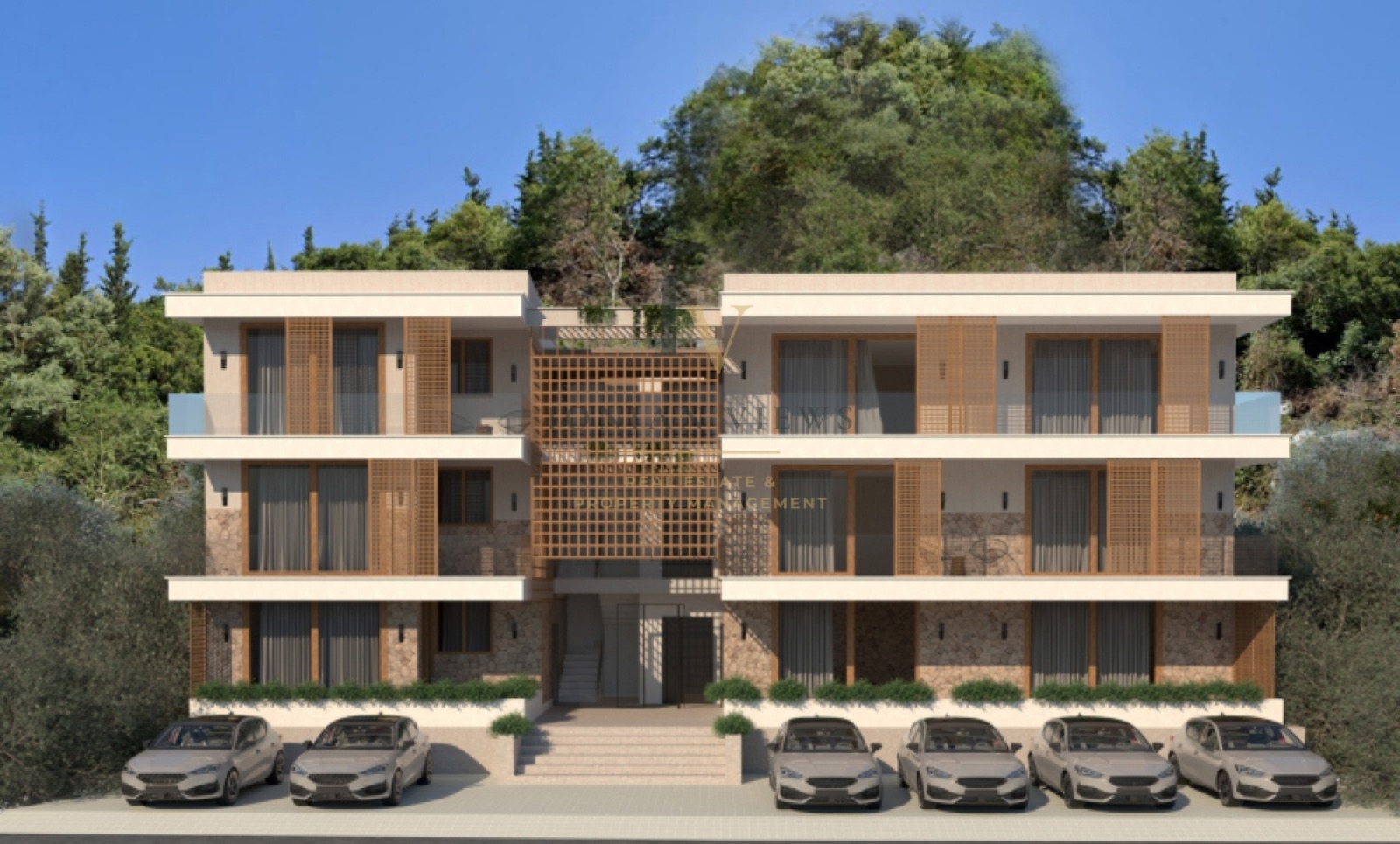
Demand for holiday properties on the island has grown, while the supply of older, high-quality homes in good locations is limited. Local developers buy plots, obtain permits and start selling at the rendering stage in order to finance part of the construction with buyers' funds. The suspension of VAT on new properties, which has already been in place for several years, has also encouraged new construction.
To give an idea of the market, here are examples of properties currently listed on the Lefkada Properties website:
- A new 61 m² apartment under construction in Nikiana, priced at around €197,000
- Apartments under construction in Lefkada town, ranging from around €196,000 to €235,000
- A new complex of ten duplex units near Vasiliki, starting from around €125,000
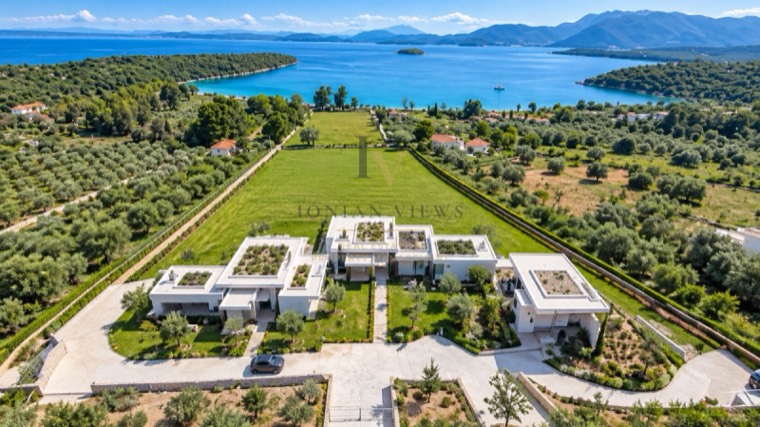
- Luxury villas under construction near Nidri, ranging from around €380,000 to €560,000
Prices change and units sell, so it is worth checking the properties currently available and the villas for sale before planning a budget.
The advantages of a new property from a developer in Greece
Lower entry price. Developers usually offer a better price to the first buyers while the project is still on paper. As construction progresses, the price of the remaining units tends to rise.
Choice of unit and finishes. At an early stage you can choose the floor, orientation and view, and sometimes also flooring, kitchen, tiling and even small changes to the internal layout. With a second-hand property, you will pay for renovation to achieve the same result.
Energy efficiency and modern construction standards. New buildings in Greece are built according to up-to-date energy regulations, and most new developments achieve a high energy rating, usually A or B and above. In practice this means better insulation, double-glazed windows, heat pumps and efficient air conditioning, and lower electricity bills in summer and winter. Seismic building standards, which are especially important in the Ionian Sea region, have also been updated over the years.
Warranty. Under the Greek Civil Code, the developer is liable for construction defects, and the limitation period for claims relating to building defects is usually five years. The contract should explicitly set out the warranty and how defects will be handled.
Fewer maintenance surprises. In the first years you will not need to replace plumbing, a roof or an electrical system, which is a major advantage for anyone managing the home from abroad.
The risks of off-plan buying
The other side of the coin is that you are paying for something that does not yet exist. These are the main risks:
- Delays. A delay of a few months is almost routine, due to labour shortages, permits or weather. A delay of a year or more can disrupt plans, for example an entire rental season.
- Developer insolvency. If the developer runs into difficulties mid-construction, the money you have paid may get stuck. In Greece there is no general obligation to provide the buyer with a bank guarantee, as is common in your home country.
- Changes to the plan. The developer may change materials, areas or layout. Without a detailed technical specification in the contract, it is difficult to argue that you received less than was promised.
- Building permit problems. A permit that has been revoked or is under appeal, or construction that exceeds it, can delay delivery and registration and, in extreme cases, lead to fines or a demolition order.
- Encumbrances on the land. Many developers finance the project with a bank loan, and the land is mortgaged to the bank. You need to ensure that the encumbrance is removed from your unit before it is registered in your name.
None of these risks should put you off, but each of them needs to be addressed in the due diligence and the contract.
Building permit in Greece: what to check before paying
The first check is the building permit (άδεια δόμησης). In Greece, permits are issued through an online system of the Technical Chamber of Greece (TEE) called e-Adeies, and the permit is checked and approved by the local planning authority. Every permit has an identification number, and your lawyer or engineer can check in the system that the permit exists, is valid and matches what has been presented to you: the number of floors, the number of units, the areas and the residential use.
Beyond the permit, your lawyer should check:
- Land ownership. Who the registered owner is in the land registry (Κτηματολόγιο), whether the developer is the owner or is building under a land-for-flats arrangement (αντιπαροχή) with the landowner, and what this means for the party signing with you.
- Encumbrances and attachments on the land and on the development company.
- The condominium regulations and registration of the units (σύσταση οριζόντιας ιδιοκτησίας), which define your unit, its share of the land and the common areas.
- The developer's track record. How many projects they have completed, whether they were delivered on time, and what previous buyers say. Visiting one of their previous projects is worth more than any rendering.
- Your own engineer to review the plans and specification, and later the construction progress.
These checks are similar in substance to those described in the guide to buying land and building in Greece, except that here it is the developer, not you, who holds the permit.
Deal structure: preliminary contract, final contract and staged payments
An off-plan purchase in Greece usually has two stages. At the first stage, you sign a preliminary contract (προσύμφωνο), usually before a notary, which sets the price, the specification, the delivery date and the payment schedule. At the second stage, when the unit is ready and registered, you sign the final deed before the notary, and ownership is registered in your name. There are projects in which the buyer acquires their share of the land from the outset and signs a construction agreement with the developer at the same time. The exact structure affects taxation and the level of protection, so your lawyer should explain it before signing.
What should appear in the contract:
- A payment schedule tied to construction milestones, such as the frame, roof, windows and finishing, not just to dates. This way your money does not run ahead of the work on site.
- A significant final payment made only on delivery and signature of the final deed.
- A bank guarantee, if the developer is willing to provide one. It is not required by law, but it can be requested, especially for the deposit.
- A late-delivery penalty, at a fixed amount for each month of delay, and the right to cancel the transaction and get your money back if the delay exceeds a defined date.
- A full technical specification as an annex to the contract: materials, brands, systems, net and gross areas.
- Terms for changes you request, and their cost.
All payments should be made by bank transfer from an identified account, with full documentation. This is important both for the Greek tax authorities and for the Golden Visa, if it is relevant to you.
VAT on a new property in Greece and transfer tax
On the first sale of a new building by a developer, VAT of 24% applies in principle. In practice, Greece has suspended this VAT for several years. The current suspension was extended by Law 5246/2025 until 31 December 2026, and it applies when the developer submits a suspension application. During the suspension period, the buyer pays property transfer tax of 3% instead of VAT, and with the municipal surcharge this comes to about 3.09%. The difference between the two situations is tens of thousands of euros even on a small apartment.
The Greek government has announced that it plans to extend the suspension to 2027 as well, but as of writing we have not found a final legal text anchoring the extension. If your final deed is expected to be signed in 2027, ask your lawyer to check which tax will apply, and have the contract determine who bears the cost if VAT is reinstated.
Another point that foreign buyers must be aware of: according to reports from November 2026, a law was published in Greece raising transfer tax to 15% on the purchase of residential properties by individuals who are tax residents outside the European Union, starting from 1 July 2027. In an off-plan transaction this is especially relevant, because the commitment is created today but the final deed is signed only on delivery. According to the analyses published so far, a preliminary contract does not protect against the new rate. The implementation details are still being clarified, so this is an issue that must be checked with a Greek lawyer before any commitment. Further details on all taxes and costs appear in the guide Taxes and costs of a property in Greece.
Delivery: certificates, connections and the building's electronic identity
Completion of construction is not the end of the process. Before you receive a key and sign the final deed, make sure the following documents are in place:
- A completion and inspection certificate for the construction in accordance with the permit, including approval from the supervising engineer.
- The building's electronic identity (ΗΤΚ, Ηλεκτρονική Ταυτότητα Κτιρίου). This is a digital file in the national registry of the Technical Chamber, opened together with the building permit and bringing together the permit, the plans and the energy certificate. As a rule, a certificate of completeness of the file is required before a transfer of ownership, and the registration is carried out by a qualified engineer (details on gov.gr).
- An energy performance certificate (ΠΕΑ) confirming the rating promised to you.
- Electricity, water and sewerage connections in the name of the unit. Connections to the network sometimes take several weeks after completion of construction, and without them you cannot live in or rent out the property.
- Registration of the unit in the land registry and removal of any mortgage held by the developer's bank.
It is worth carrying out a handover inspection with your engineer and recording every defect in writing before signing, so that it is clear what the developer undertakes to repair.
Golden Visa and a property under construction
Many people ask whether it is possible to obtain a Golden Visa for an apartment under construction. Under the current rules, the threshold in Lefkada and most islands is €800,000 per property, and in other areas €400,000. A €250,000 route exists only for converting a commercial property into residential use and for listed buildings. According to legal sources, an off-plan purchase can qualify under certain conditions, for example a notarised preliminary contract and full, documented payment through a Greek bank, but the decision depends on the details of the transaction. Most properties under construction in Lefkada are sold below the threshold, so in practice this is mainly relevant to luxury villas. Remember also that a Golden Visa property may not be rented out on a short-term basis. All the details are in the Golden Visa guide to Greece.
How to get started
If an investment in an apartment under construction interests you, start with the developer rather than the rendering: who they are, what they have built, and how their previous projects looked after five years. From there, move on to checking the building permit and the land, to a contract with a payment schedule tied to construction, and to tax planning that takes into account the expected date of signing the final deed.
The Lefkada Properties team supports you in your language at every stage, together with the local agency we work with: choosing a project, getting to know the developer, connecting you with a local lawyer and engineer, and monitoring construction through to delivery. Would you like to hear about the new projects currently available on the island? Contact us or browse the properties currently available.
The information in this article is general and does not constitute legal, tax or investment advice. Legislation and taxation in Greece change frequently, and before any commitment you should verify the details with a Greek lawyer and accountant.
Frequently asked questions
Is it safe to buy an off-plan apartment in Greece?
+
It can be safe, but in Greece there is no general obligation to provide the buyer with a bank guarantee as under the sale law in your home country. Protection rests on checking the building permit, ownership and encumbrances, on the developer's track record, and on a contract with payments tied to construction stages and penalties for delay.
Do you pay VAT on a new apartment from a developer in Greece?
+
In principle, VAT of 24% applies to the first sale of a new building, but it is suspended until 31 December 2026 under Law 5246/2025, and instead a transfer tax of about 3.09% is paid. The government has announced an intention to extend the suspension to 2027, so it is worth checking the current position with a lawyer before signing.
How do you check a building permit in Greece?
+
Building permits are issued through the e-Adeies system of the Technical Chamber of Greece, and every permit has an identification number. Your lawyer or engineer can verify that the permit is valid and that it matches the number of units, the areas and the use presented to you.
How is the payment schedule structured in an off-plan purchase?
+
Usually you pay a deposit on signing the preliminary contract, interim payments according to construction milestones, and a final payment on delivery and signature of the final deed. Payments should be tied to progress on site, not just to dates.
Can you get a Golden Visa for a property under construction?
+
According to legal sources, it is possible under certain conditions, for example a notarised preliminary contract and full, documented payment, but the threshold in Lefkada is €800,000. Most apartments under construction on the island are sold below the threshold, and a Golden Visa property may not be rented out on a short-term basis.
Want personal guidance buying property in Greece?
The Lefkada Properties team will guide you in your language – from choosing the property, through the legal checks, to receiving the keys. The first consultation is free.