Contents ⌄
- Distance and flights from your home country
- Price levels for a home with a sea view
- Taxes and purchase costs
- Golden Visa and residency routes
- Rental market
- Quality of life, legal certainty and the international community
- Where Greece is weaker, honestly
- So where should you buy? According to your profile
- Why Lefkada and the Ionian Coast
Anyone looking for overseas real estate today and staying in the Mediterranean basin almost always arrives at three options: Greece, Cyprus and Portugal. All three are in the West, all three are EU members, and all three have a growing international community. But the differences between them are greater than they appear in advertisements: distance, price levels, taxes, residency rules, and above all the fit with the reason you are buying.
Several significant things have changed in the past year. Greece passed a law that sharply raises the purchase tax on homes for buyers who are not EU tax residents, Portugal raised the purchase tax for foreign residents, and Cyprus is talking about tightening the rules for buyers from outside the EU. We have put together a practical comparison here, including the areas where Greece is less strong.
Distance and flights from your home country
It sounds like a technical detail, but in practice distance determines how many times a year you will use the home.
- Cyprus: About an hour's flight from your home country to Larnaca or Paphos, with many flights every day and in every season. It has no competitor on this point.
- Greece: About two hours to Athens and about an hour and a half to Crete and quite a few islands. Lefkada is reached via Aktion Airport near Preveza, about a 15- to 30-minute drive from the island. In summer there are often direct or charter flights from your home country to Preveza. The rest of the year you fly via Athens, or land in Athens and continue by car.
- Portugal: About five hours on a direct flight to Lisbon, and the Algarve is mainly reached with a connection. For anyone planning short weekends, it is simply too far.
Price levels for a home with a sea view
Prices vary greatly between regions, so it is important to compare region to region rather than country to country.
- Cyprus: Limassol is now one of the expensive markets in the basin, and new seafront apartments there usually cost much more than half a million euros. In Larnaca and Paphos prices are more comfortable, but a villa with an open sea view still costs a significant amount.
- Portugal: Lisbon, Cascais and the Algarve have become much more expensive over the past decade. A home with a sea view in sought-after areas usually starts at high amounts, and anyone looking for a lower price will need to move away from the coast or go north.
- Greece: Here the gaps are the largest. Mykonos and Santorini are very expensive, but in the Ionian Islands and on the western mainland coast you can still find villas and homes with sea views at prices significantly lower than Limassol or the Algarve. Building plots are even cheaper.
Taxes and purchase costs
Greece
Today in Greece you pay a transfer tax of 3% on the transaction price, and with the municipal tax added the effective rate is about 3.09%. On top of that are notary fees, lawyer fees, registration and agent fees. In most transactions the total cost is around 6%–10% of the property price, depending on the property and the transaction.
The important change: In November 2026 a law was published in the Greek Government Gazette (number 5355/2026, according to reports) that raises the transfer tax on the purchase of residential properties by individuals who are tax residents outside the European Union and the European Economic Area to 15%. With the municipal surcharge this comes to about 15.45%. According to reports, the new rate will apply to final contracts signed from July 1, 2027, and transactions completed before then will pay the current rate. A few points that are important to understand:
- The criterion is tax residency, not citizenship. A foreign buyer with a European passport who remains a tax resident in your home country may be included in the new rate.
- According to the Greek government's announcement, plots, commercial properties and non-residential properties are not included in the 15% rate.
- The details on exemptions, purchases through a company and preliminary contracts signed before the deadline are still disputed among lawyers. Do not rely on a general interpretation; check your own case with a Greek lawyer.
The practical meaning: anyone considering buying a home in Greece will benefit from a window of a few months at the current tax rate. And for anyone planning to build, a plot may be a route worth examining. Full details are in the guide Taxes and costs when buying property in Greece.
Cyprus
In Cyprus it is important to know whether the property is new or second-hand:
- New apartment from a developer: VAT is paid. The standard rate is 19%, and there is a reduced rate of 5% for a first residential apartment, subject to area and price caps. It is intended mainly for those who live in the property, so an investor buying an apartment to rent should assume they will pay the full rate. In a transaction subject to VAT, no transfer fees are paid.
- Second-hand property: Tiered transfer fees are paid (3%, 5% and 8% according to price bands), and they are usually subject to a 50% discount. Stamp duty was abolished from the beginning of 2026, according to several professional sources.
- Purchase permit: Buyers from outside the EU require a permit from the authorities. In September 2026 the Cypriot Minister of the Interior announced that the government is preparing stricter rules for buyers from outside the EU, and their details have not yet been published.
The risk that must not be ignored: The division between the south of the island and the Turkish-controlled north. In the north, a large part of the land was owned by Greek Cypriots before 1974, and buying there can become entangled in ownership claims and legal proceedings in the EU. Prices in the north are low and tempting, and many foreign buyers have bought there, but legal certainty is much lower. In the south, too, it is worth checking carefully that there is a clean Title Deed. Delays in issuing deeds have been a known problem in Cyprus for years.
Portugal
In Portugal you pay purchase tax (IMT) and stamp duty of 0.8%. Under the government housing programme (Construir Portugal), a flat IMT rate of 7.5% was set in 2026 for foreign residents buying a residential property, and with stamp duty this comes to about 8.3% even before a lawyer and registration. There are exceptions, for example someone who becomes a Portuguese resident within a defined period or who rents the property on a long-term lease, but the conditions and exact effective date are described differently in different sources. Here a Portuguese lawyer is essential.
Golden Visa and residency routes
The Golden Visa is one of the main motivations for foreign buyers considering overseas real estate investment, and in the three countries the situation is completely different.
- Greece: The Greek Golden Visa is still open to real estate, in tiers. 800,000 euros in Attica, Thessaloniki, Mykonos, Santorini and islands with a population above 3,100 residents. 400,000 euros in the rest of the regions. 250,000 euros for converting a commercial building into residential use or restoring a listed building. In the two higher tiers, one property of at least 120 m² is required, and several smaller properties cannot be combined. A property purchased under this route may not be rented short-term in the Airbnb style. It is important to know that anyone holding a Golden Visa who is not a tax resident in Greece is still expected to pay the new transfer tax on homes from 2027. Full details are on the Golden Visa in Greece page.
- Cyprus: There is an accelerated permanent residency route with an investment of at least 300,000 euros (before VAT), including, among other options, buying a new apartment from a developer in a first sale, and with a requirement for a secured annual income of about 50,000 euros. A property in the north of the island does not qualify. The citizenship-by-investment programme was already abolished in 2020.
- Portugal: Since October 2023, real estate purchases no longer qualify for a Golden Visa. The remaining routes go through investment funds, culture and research. Anyone buying an apartment in Portugal in order to obtain residency needs to look for another route.
Rental market
- Greece: Very strong tourist demand in summer, especially on the islands, with a season that is gradually lengthening. In winter most islands are quiet. Registration with AMA (the short-term rental registry) is mandatory, and in parts of central Athens registration of new short-term rentals has been frozen. The advantage: in Greece purchase prices are relatively low compared with in-season income. The disadvantage: highly seasonal income. More detail is in the guide Renting out property in Greece on Airbnb.
- Cyprus: Limassol has a strong long-term rental market thanks to international companies and foreign workers, including quite a few expatriates. Tourist rentals are less seasonal than in Greece thanks to the climate.
- Portugal: High tourist demand almost all year round, but regulation of short-term rentals (Alojamento Local) is complex and changing, and in some municipalities there are restrictions on new licences.
Quality of life, legal certainty and the international community
Quality of life: Portugal offers vibrant European cities, the ocean and rich culture, but also colder water and Atlantic weather. Cyprus feels very familiar: warmth, English everywhere and comfortable weather in winter, but also a lot of dense construction. Greece offers the greatest variety: green islands, villages, clear sea and excellent food, at a relatively low cost of living.
Legal certainty: EU law applies in all three countries, and an orderly purchase with a local lawyer is safe. In Greece the cadastre (the digital land registry) is still not complete in all areas, and licensing and construction processes can be slow. This is one of the points where Greece is less strong, and thorough due diligence is essential. In Cyprus the main risks are title deeds and the north. In Portugal the bureaucracy is known to be slow, but the system is stable.
International community: In Cyprus, mainly in Limassol and Larnaca, there is now a large international community with schools, community institutions and businesses offering services in your language. In Portugal there is an active community in Lisbon and Porto, part of which is linked to citizenship for descendants of Sephardic Jews. In Greece there is an international community mainly in Athens and Crete. In the Ionian Islands it is much smaller, and some buyers actually see this as an advantage.

Where Greece is weaker, honestly
- The new tax: From July 1, 2027, foreign buyers who are not EU tax residents are expected to pay about 15% on homes. This is a significant change, and even if the time window until then offers an opportunity, it must be taken into account.
- Seasonality: On many islands winter is very quiet, and some services close.
- Bureaucracy: Licensing, building permits and the cadastre require patience and close local support.
- Flights: Athens is easy to reach by air, but less central islands are harder to reach out of season.
So where should you buy? According to your profile
- Cyprus is suitable for anyone for whom proximity to your home country is above all, for anyone seeking permanent residency through a recognised route, and for anyone who wants a large international community and a long-term rental market. It is worth staying in the south and checking the title deed carefully.
- Portugal is suitable for anyone planning a genuine relocation to Europe, looking for a large city and cultural life, and not dependent on proximity to your home country or on a Golden Visa through real estate.
- Greece is suitable for anyone looking for a holiday home or an investment with a good price-to-quality ratio, nature and sea, and a relatively short distance from your home country. Greece is also the only one of the three countries where a real estate purchase still qualifies for a Golden Visa.
It is worth remembering that you do not have to choose according to the big decision. Quite a few foreign buyers start with a plot or a small holiday home, learn the market and the local process, and only then decide whether to expand, move in or seek residency. In each of the three countries it is worth arriving at least once for a several-day tour before signing, seeing the area also out of season and meeting the lawyer who will accompany you.
Anyone torn between real estate in Greece or Cyprus should first ask what the goal is: residency and community, or a holiday home and an investment with high value for money.
Why Lefkada and the Ionian Coast
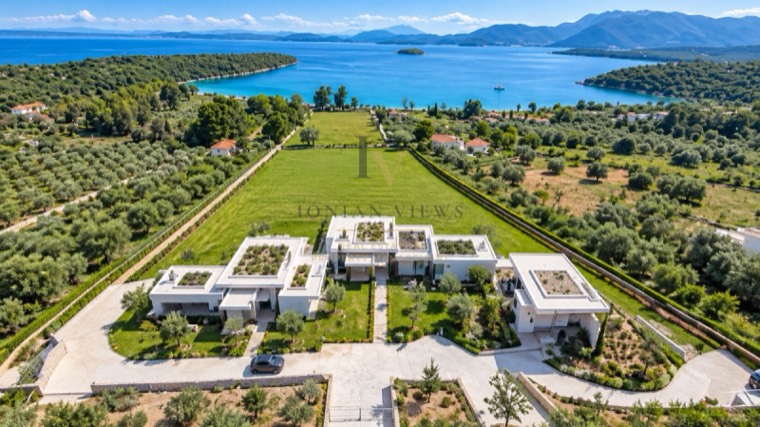
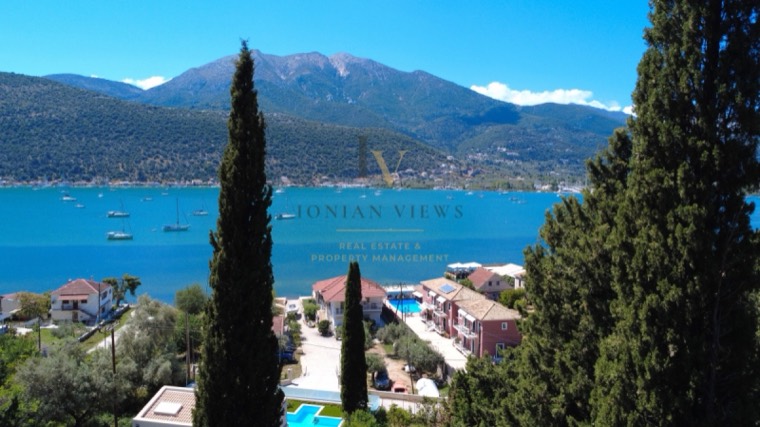
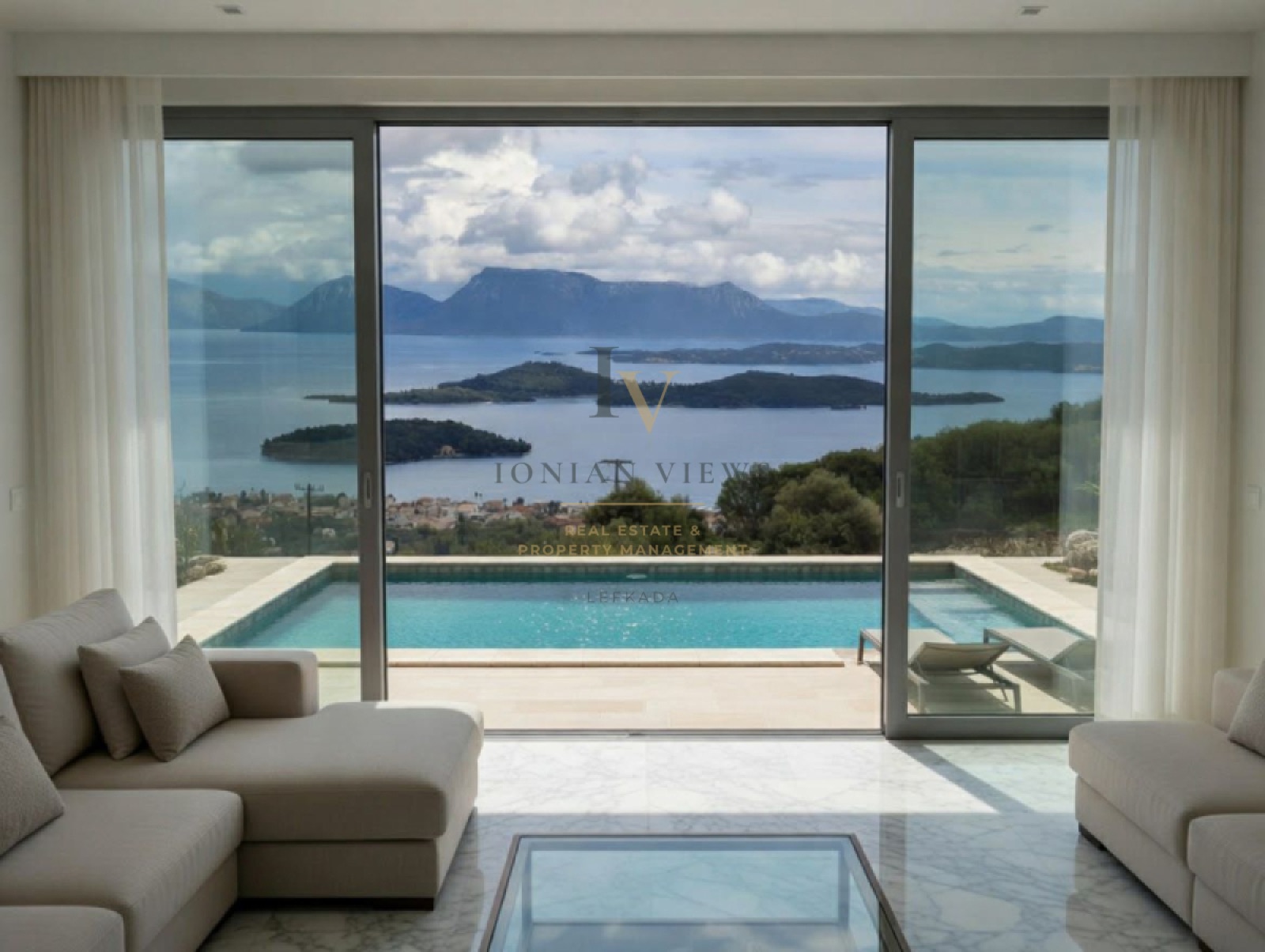
Within Greece, the Ionian Islands and the western coast offer a combination that is hard to find elsewhere. Lefkada is connected to the mainland by a bridge, so there is no dependence on ferries, and Preveza Airport is a short drive away. The island has some of the most beautiful beaches in Greece, green mountains, traditional villages and open sea views, and its price level is still significantly lower than that of the famous Cycladic islands. It is important to be precise about the Golden Visa: Lefkada is an island with a population above 3,100 residents, so under the current rules it falls into the 800,000 euro tier. By contrast, on the mainland coast opposite, in areas such as Preveza and Parga, the threshold is 400,000 euros. Anyone whose main goal is a Golden Visa can examine this coast and still enjoy the same sea and the same airport. This too should be verified with the authorities before any transaction.
Most foreign buyers who come to Lefkada Properties are not looking only for a visa, but for a home they will want to return to again and again. At Lefkada Properties we work in cooperation with a local Greek real estate office and support foreign buyers in your language, from the first search to receiving the keys: property sourcing, legal checks, coordination with a lawyer and notary, and a clear explanation of every cost. You can start by browsing our villas in Greece, and when you want to check a specific property or plan a purchase before the new tax takes effect, the Lefkada Properties team is available via the contact form.
The information in this article is general, updated to November 2026 and does not constitute legal, tax or financial advice. Tax and residency laws change frequently, so every transaction should be checked with a lawyer and tax adviser in each of the countries.
Frequently asked questions
Does the new 15% tax in Greece apply to foreign buyers?
+
According to the law published in November 2026, the rate of about 15% will apply to the purchase of residential properties by individuals who are tax residents outside the European Union, in contracts signed from July 1, 2027. The criterion is tax residency and not citizenship, so most foreign buyers are expected to be included. Plots and commercial properties are not included, according to the government announcement.
Can you still get a Golden Visa in Portugal by buying an apartment?
+
No. Since October 2023, real estate purchases no longer qualify for a Golden Visa in Portugal. The remaining routes go through investment funds, culture and research.
What is the difference between the Golden Visa in Greece and permanent residency in Cyprus?
+
In Greece the Golden Visa is granted for a real estate purchase of 250,000, 400,000 or 800,000 euros, depending on the region and property type. In Cyprus an investment of at least 300,000 euros before VAT is required, usually in a new apartment from a developer, together with proof of annual income.
Why should you not buy a property in northern Cyprus?
+
A large part of the land in the north was owned by Greek Cypriots before 1974, so buying there can lead to ownership claims and legal proceedings. A property in the north also does not qualify for permanent residency of the Republic.
Which country is the most accessible from your home country?
+
Cyprus, with about an hour's flight and high frequency all year round. Greece is about an hour and a half to two hours away, and Portugal is about five hours away.
Want personal guidance buying property in Greece?
The Lefkada Properties team will guide you in your language – from choosing the property, through the legal checks, to receiving the keys. The first consultation is free.